
Paving in Mandurah
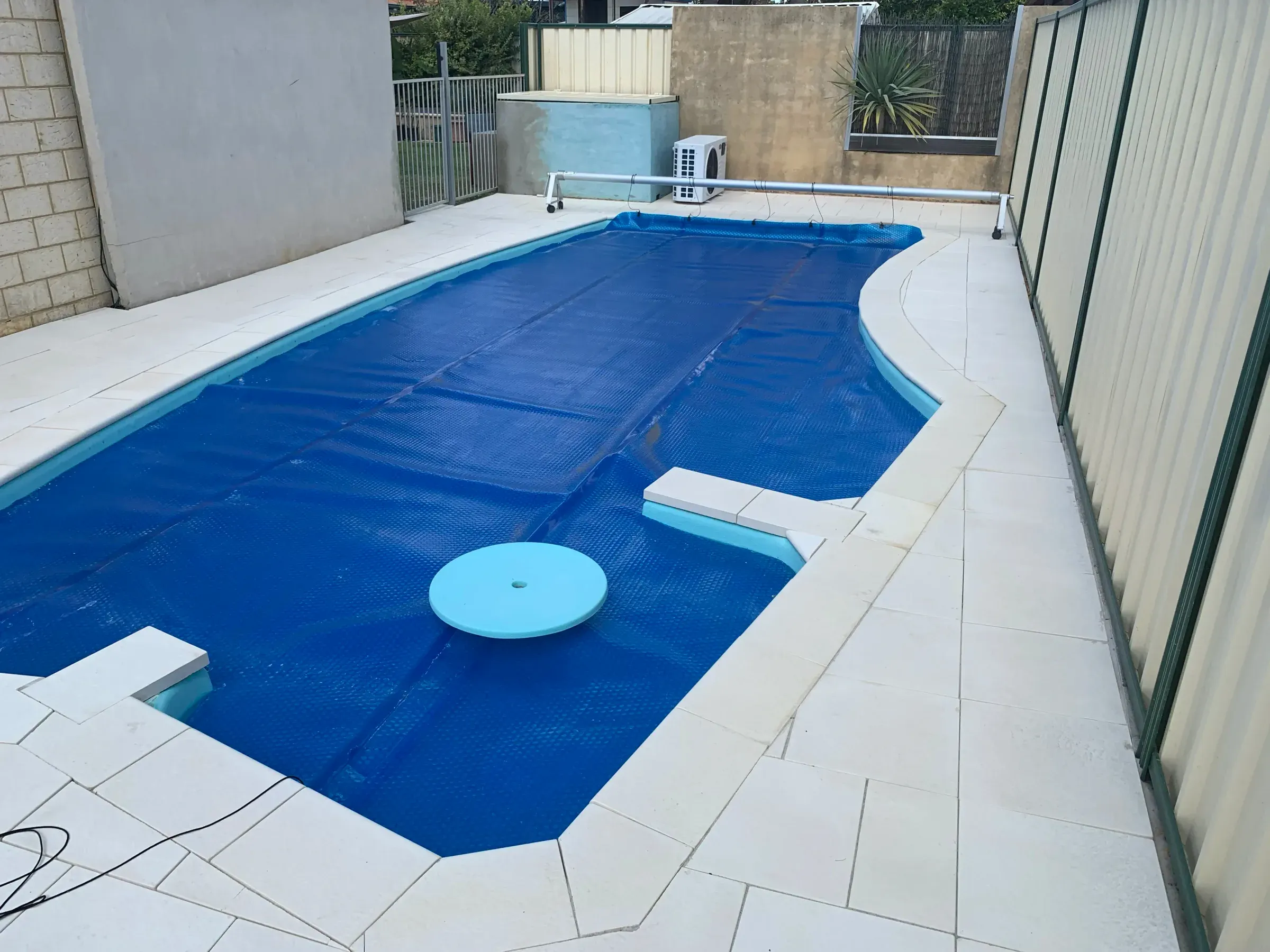
Driveways, courtyards, paths and pool surrounds — built on a base compacted for sandy ground, with the falls set so water leaves rather than sits.
- Base
- Excavated and compacted in layers
- Drainage
- Falls set away from the house
About paving
Almost every paving failure is a base failure
Pavers are hard-wearing and largely indifferent to weather. What moves is the ground underneath them, and on sand that ground needs building properly before anything is laid on it. Excavating to the right depth, filling with a compacting material and compacting it in layers is unglamorous, invisible and the whole job.
The depth is set by what the surface has to carry. A driveway taking a car — or a delivery van, occasionally — needs a materially deeper and stronger base than a courtyard taking a table and four chairs. Quoting the two the same way per square metre is how a driveway ends up rutted and dipped in its second summer.
Falls, drainage and soakwells
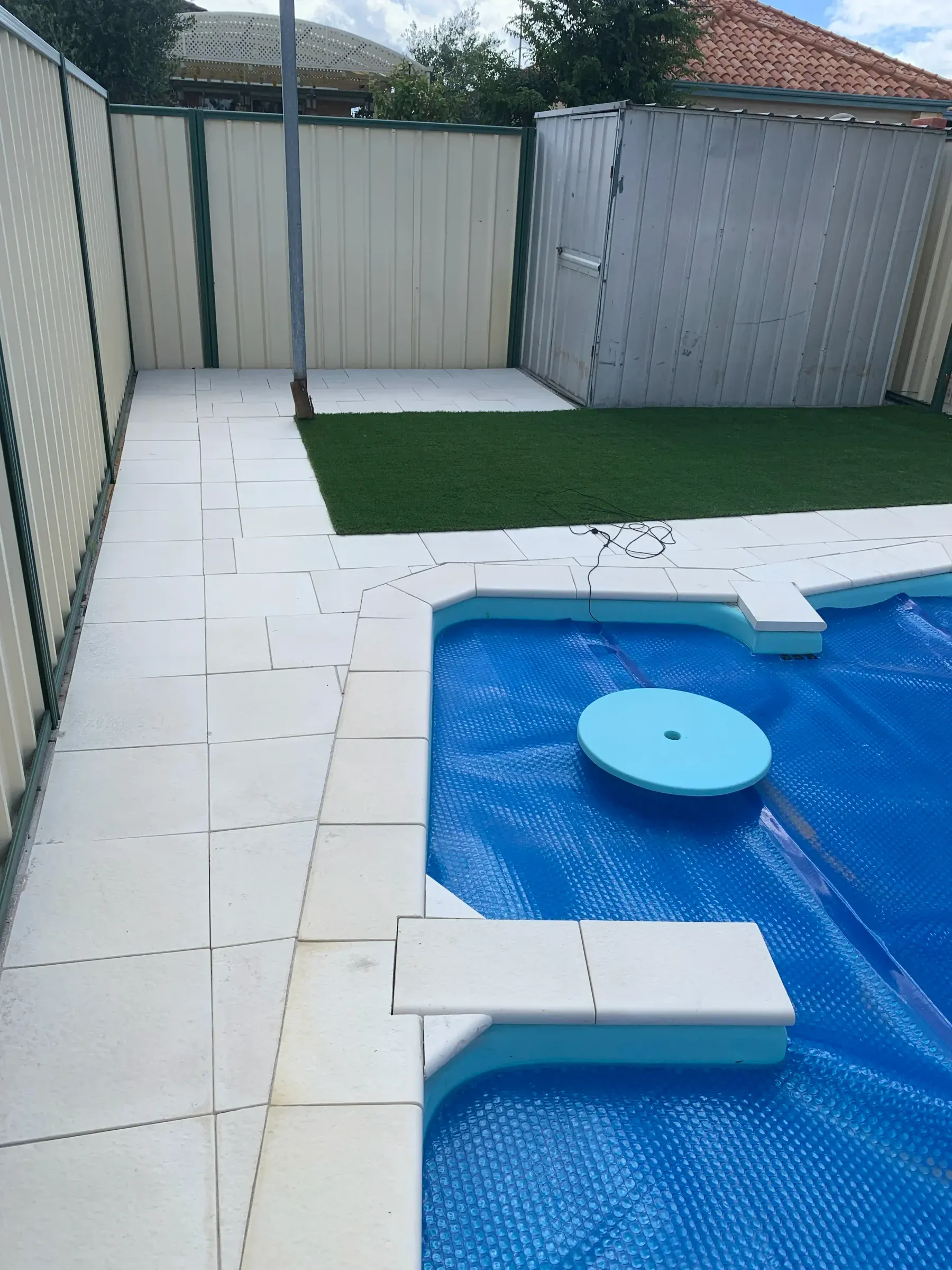
Sandy ground drains beautifully right up until you cover it with something water cannot pass through. From that point the water has to be given somewhere to go, and the answer is falls — a deliberate slope built into the surface, running away from the house rather than toward it.
On a block where a new paved area meaningfully increases the hard surface, a soakwell is frequently the right answer rather than an optional extra. Water pooling against a wall, or running back toward a slab, is expensive to correct afterwards and inexpensive to design out beforehand. It is the detail most often missed, and it is the one we would rather over-discuss than under-do.
Choosing pavers
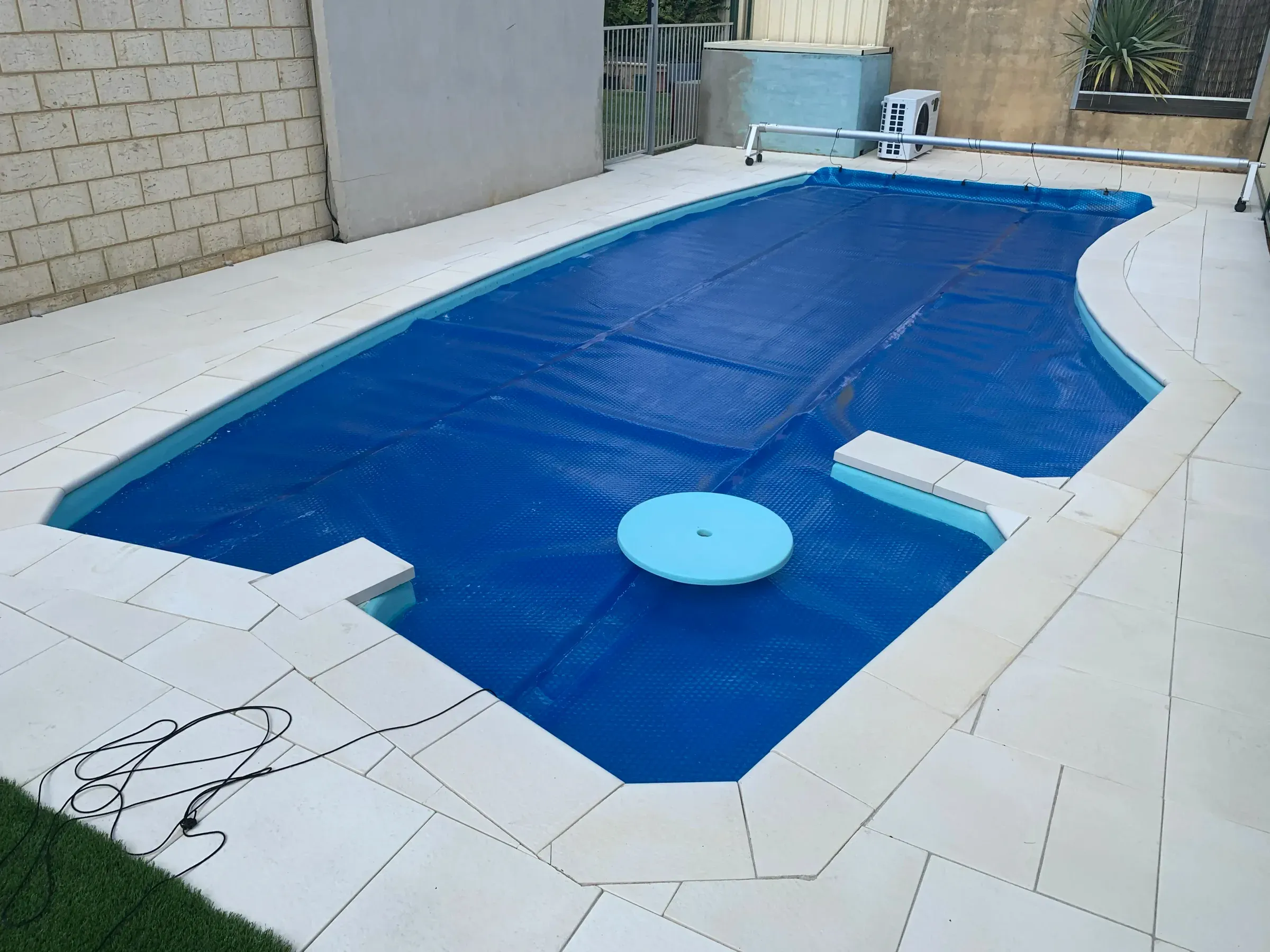
Colour and texture are the fun part and largely down to taste, but two practical things are worth weighing. Around a pool or on a north or west-facing courtyard, lighter colours stay cooler underfoot — a genuinely noticeable difference in February. And around water, texture matters: a paver with some grip is a better idea than a smooth one, however good the smooth one looks dry.
Size affects labour as well as appearance. Large-format pavers cover ground faster but are less forgiving of an imperfect base and heavier to handle. Smaller units take longer to lay but cope better with curves and awkward shapes.
Cuts, curves and edges
A rectangular courtyard is mostly full pavers. An area that curves, meets a garden bed on a diagonal, or wraps around a pool is mostly cutting, and cutting is time. That is why two jobs of identical area can price very differently.
Edge restraint is what stops the whole thing spreading. Without a proper edge, pavers migrate outward over the years, joints open and the surface loses its shape — particularly on sand, and particularly on a driveway where vehicles are turning.
What you get
Included as standard
- Excavation and removal of spoil
- Base material supplied, laid and compacted in layers
- Falls set for drainage away from the house
- Pavers laid, cut, edge-restrained and jointed
- Site left clean and offcuts taken away
Not included
- Soakwells and stormwater connections, quoted separately where needed
- Retaining walls where levels have to be held
- Removal of trees, stumps or existing slabs beyond the paved area
- Sealing, which is optional and quoted on request
Any of these can be quoted alongside the job — they are listed so the quote does not surprise you, not because we cannot do them.
Paving we have done
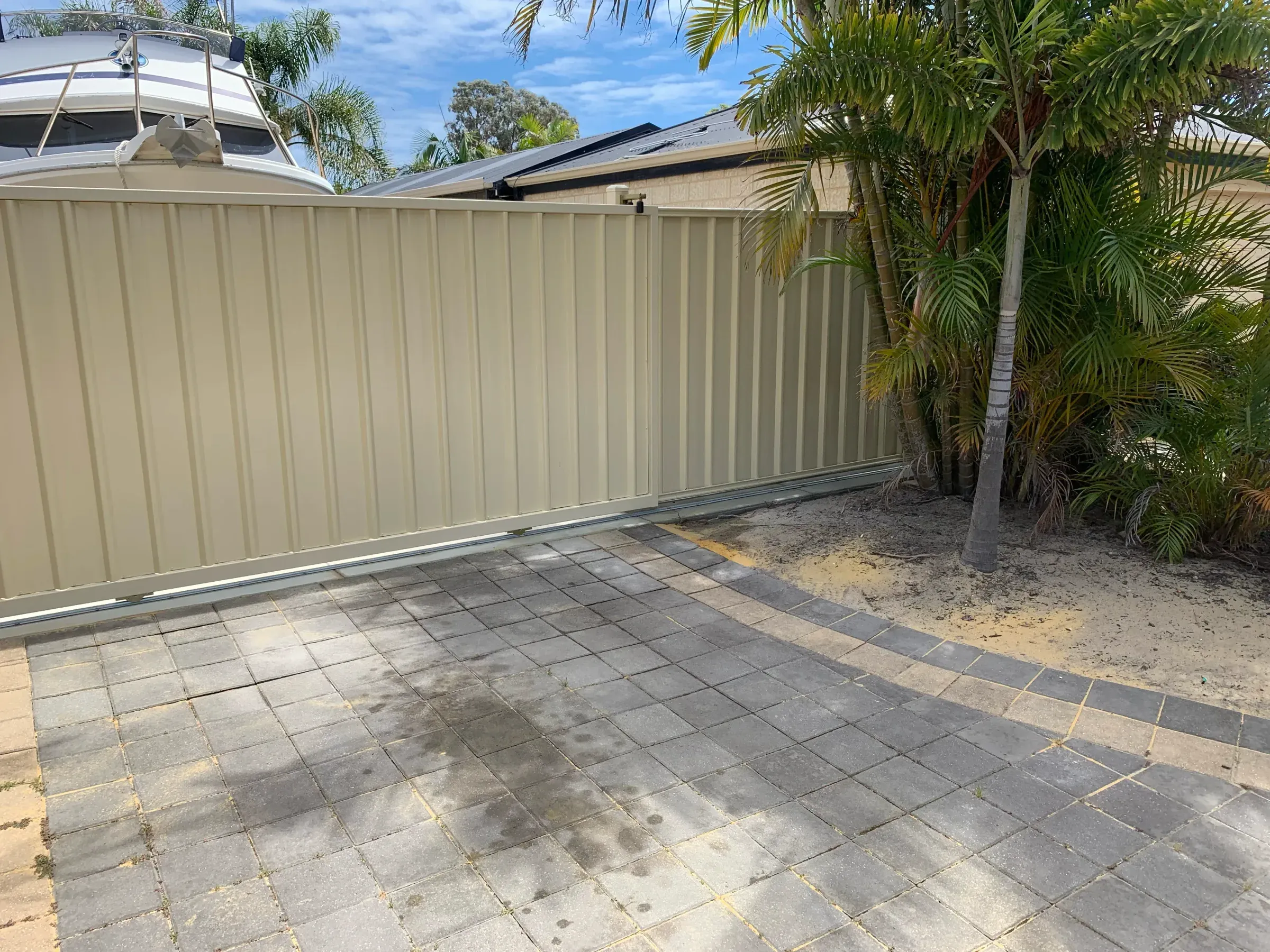
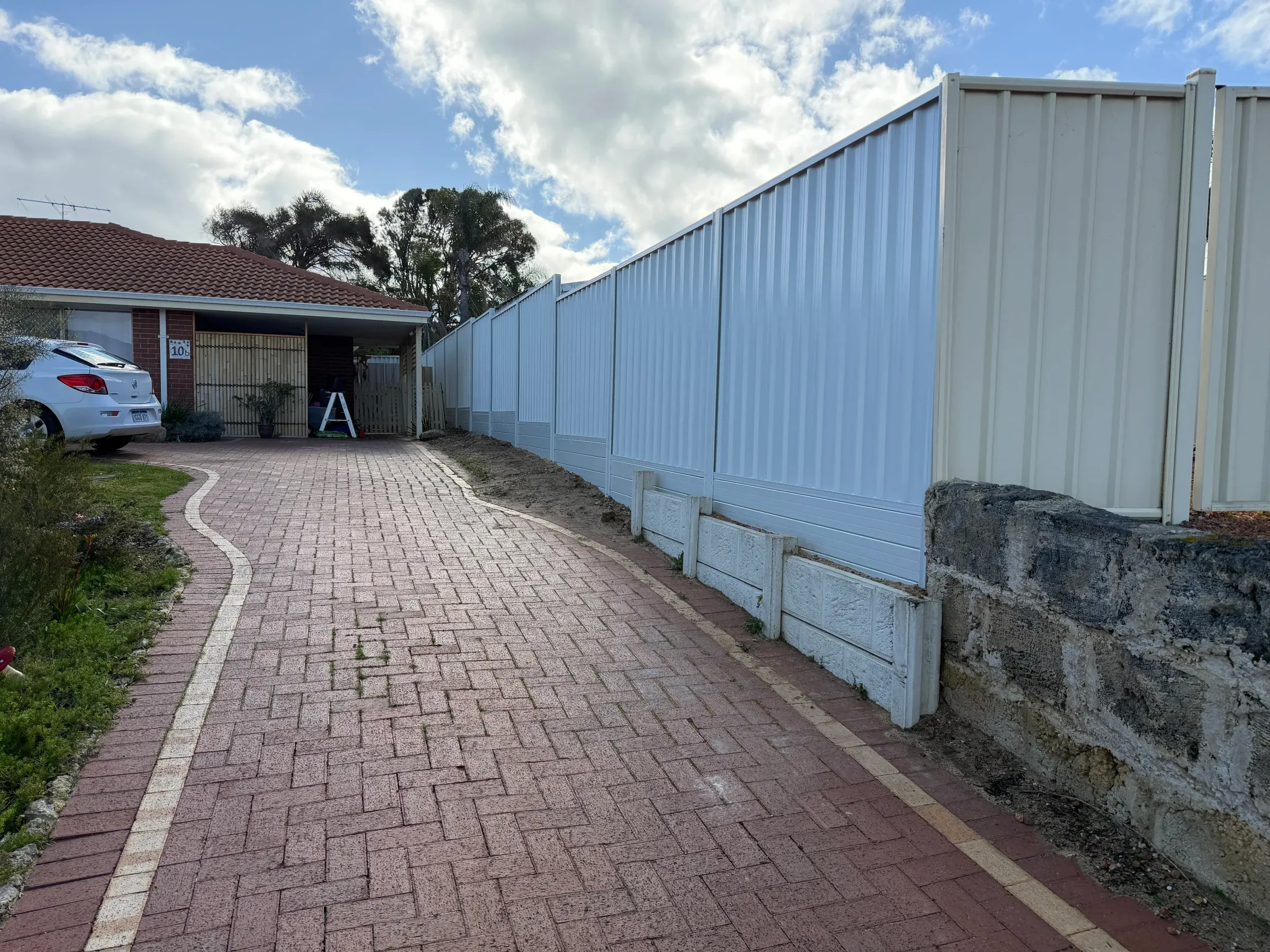
Paved driveway, boundary fence
What affects the cost
Area first, but base depth is what turns the same area into two different jobs. A driveway needs more excavation, more base material and more compaction than a courtyard of identical size.
Shape is next. Straight edges and right angles mean mostly full pavers; curves, diagonals and a pool surround mean a great deal of cutting, and cutting is labour. Levels matter too — a site that has to be regraded before paving starts carries that work as well.
Then access and disposal. Excavated sand has to go somewhere, and a block where a bobcat and a truck can reach the area is materially cheaper to work than one where everything is barrowed through a side gate. Drainage work and edge restraint are priced as their own lines.
How it works
You get in touch
Tell us what needs doing — a photo helps more than a paragraph. We come back to you within 2 business days.
We measure it up
We come to the property, walk the job with you and measure properly. The measure is free, with no obligation.
You get it in writing
An itemised written quote — materials, labour and removal priced separately, so you can see what you are paying for. It holds for 30 days.
We book it in and do it
We agree a date, turn up on it, and take the mess with us when we go. The site is left clean.
Common questions
How long does paving last?
The pavers themselves last decades. What determines the life of the surface is the base beneath and the drainage around it — a well-built base on sand with correct falls will comfortably outlast a premium paver laid on a poor one. Spend the money below ground.
Do I need a soakwell?
Often, once you are adding a real area of hard surface to a sandy block. The water that used to soak straight in now has to go somewhere. We will tell you at the measure whether your job needs one rather than leaving it for you to discover after the first heavy rain.
Can you pave over an existing slab or old paving?
Sometimes, but only if what is underneath is sound, level and draining properly, and it raises the finished height — which matters where it meets a door threshold. More often the honest answer is to take the old surface up and build a proper base.
Will weeds grow through the joints?
Some growth in joints is normal over time. Correct jointing material reduces it considerably, and it is easily managed on a maintenance visit. Weeds coming through in quantity usually signal a base or drainage problem rather than a jointing one.
Should the paving or the fence go first?
Fence posts before paving, essentially always — you want the footings in and cured before the surface comes up to meet them, not cut into a finished surface afterwards. It is one of the clearest cases for having one crew doing both.
We also do
Paving or a patio going in? The fence it runs up to and the reticulation and lawn around it are the same crew and the same schedule — which is what stops one trade digging up another one's finished work.
Fencing & Gates
Colorbond, pool, aluminium slat, tubular and PVC fencing, plus gates from a single side gate to a full automated entry. Removal of the old fence included, across Mandurah and Peel.
Landscaping
Lawn and artificial grass, reticulation and repairs, garden maintenance, clean-ups, mulching and planting — across Mandurah, Peel and north to Rockingham.
Tell us what needs doing.
A written, itemised quote after we have measured the job — not a number guessed over the phone.