
Gates and automation in Mandurah
Single and double gates, sliding gates, and full automation — specified so the gate still swings true and latches properly in its fifth year, not just its first week.
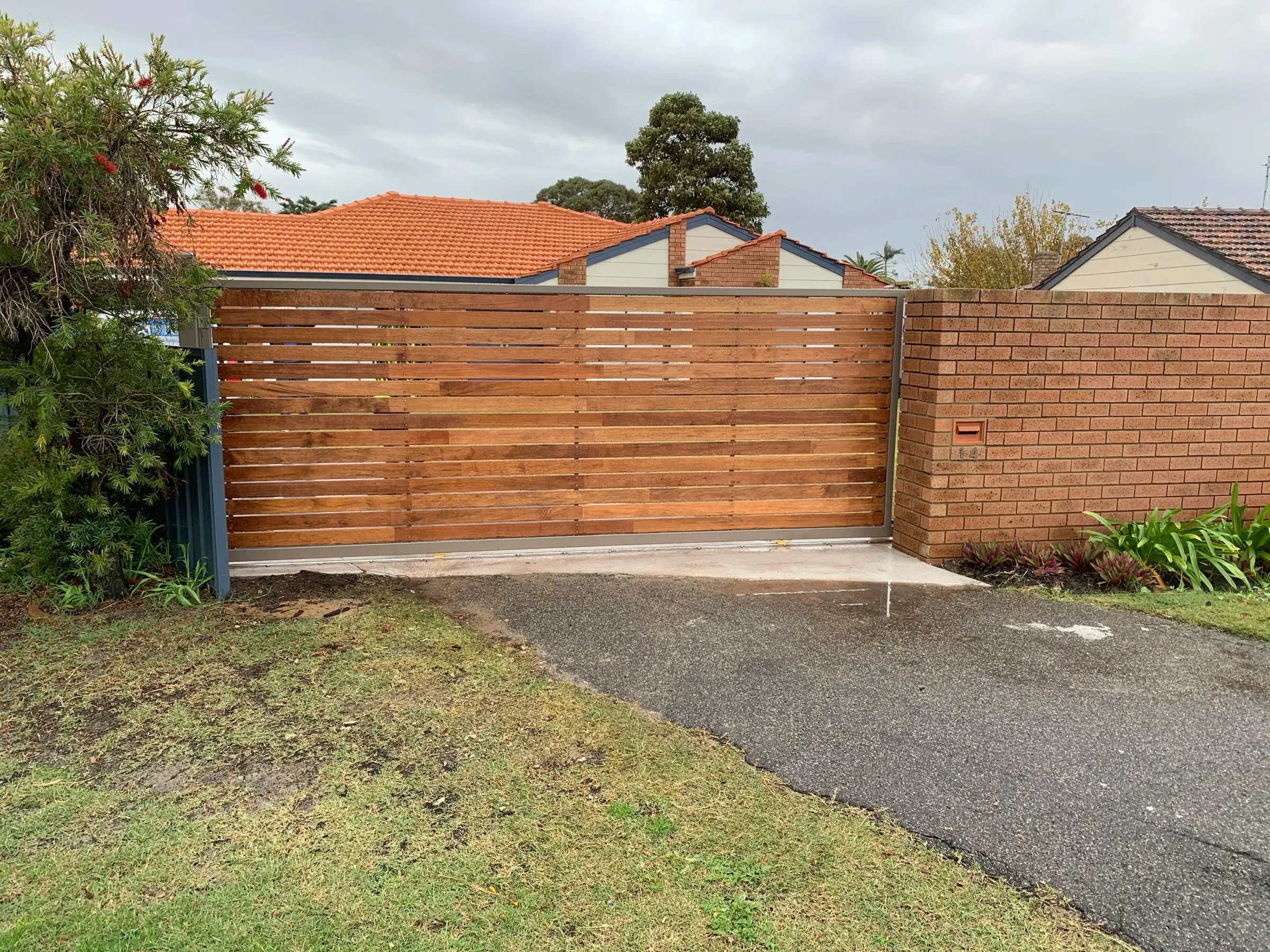
- Starts from
- $1,250 each + GST
- Types
- Single, double, sliding and automatic
About gates & automation
Gates are the part of a fence that moves
A fence is static. A gate is a moving structure hanging off a post, operated several times a day, in weather, often carrying its own weight plus whatever the wind does to it. That is why gates are where fences fail, and why a gate is worth specifying properly rather than treating as a hole in a fence run.
Almost everything that goes wrong is a post problem. A gate post carries an eccentric load — the whole weight of the gate hanging off one side — so it needs more footing than the posts either side of it, and it needs that footing sized for the gate it is actually carrying. A double gate spanning a driveway is a different proposition from a side gate to a bin area, and using the same post for both is how a gate ends up dropping and catching on the ground.
Swing or slide
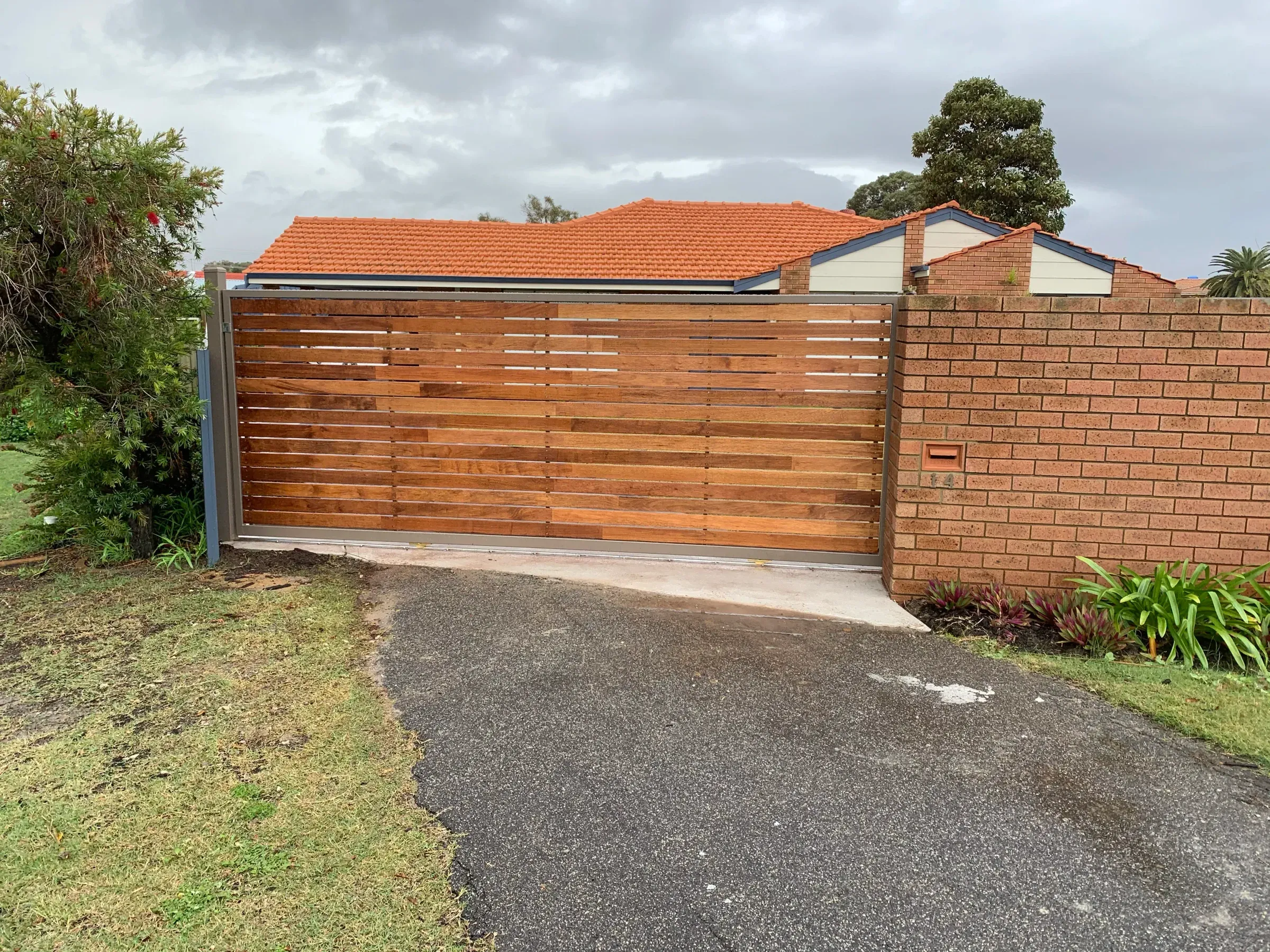
A swinging gate needs room to swing, and that room has to be clear and level through the whole arc. On a driveway that rises from the street — common enough around here — a swinging gate can foul the ground before it is fully open, and the fix is either regrading, hanging it to open the other way, or not using a swinging gate.
A sliding gate needs room along the fence line instead, roughly the width of the opening again, and it needs a level track or a cantilever arrangement. It is often the answer on a narrow block or a sloping driveway where there is simply nowhere for a swing to go. Sliding gates also handle wind better, because they are never presented broadside to it while opening.
Automation, power and safety
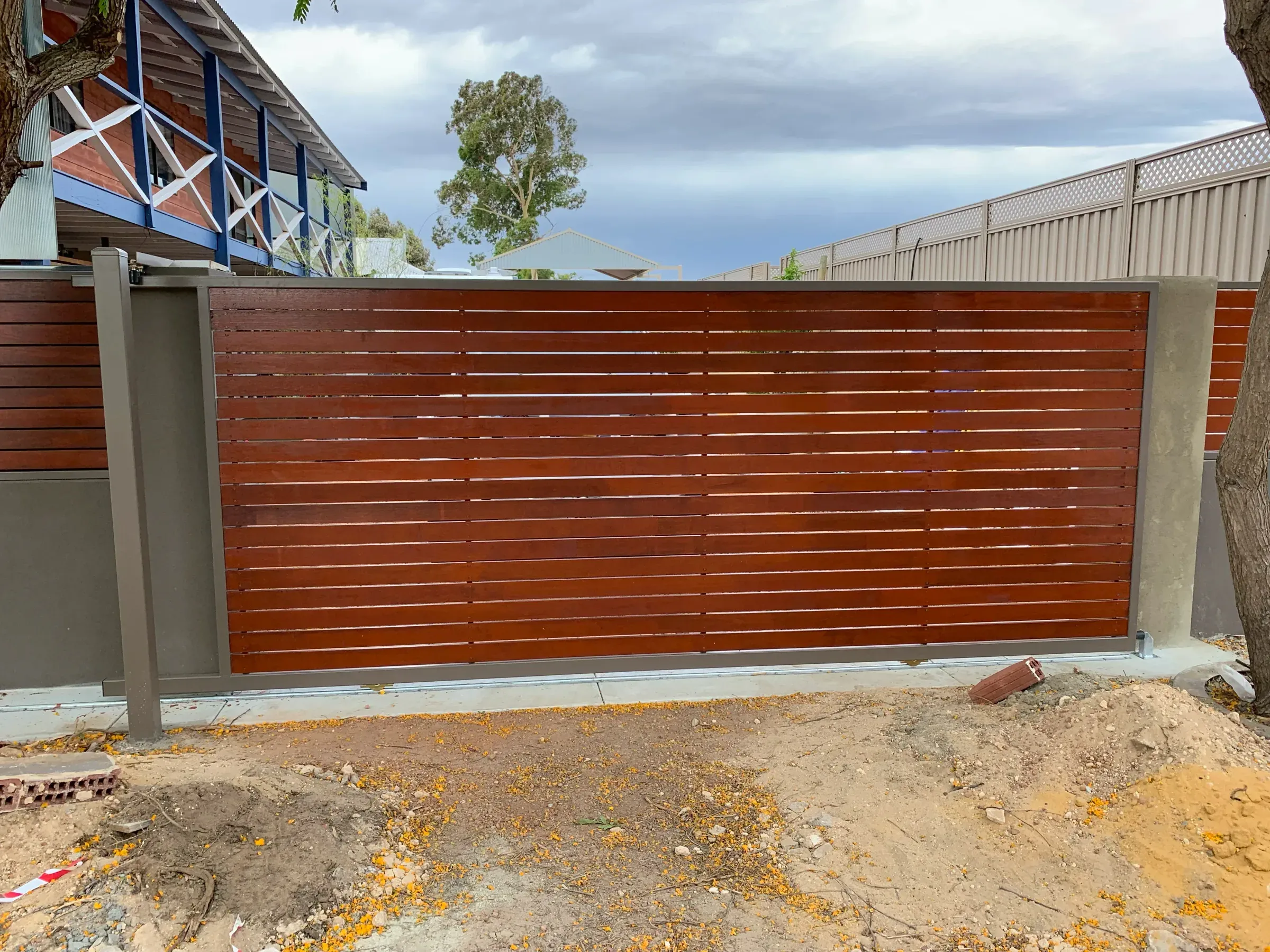
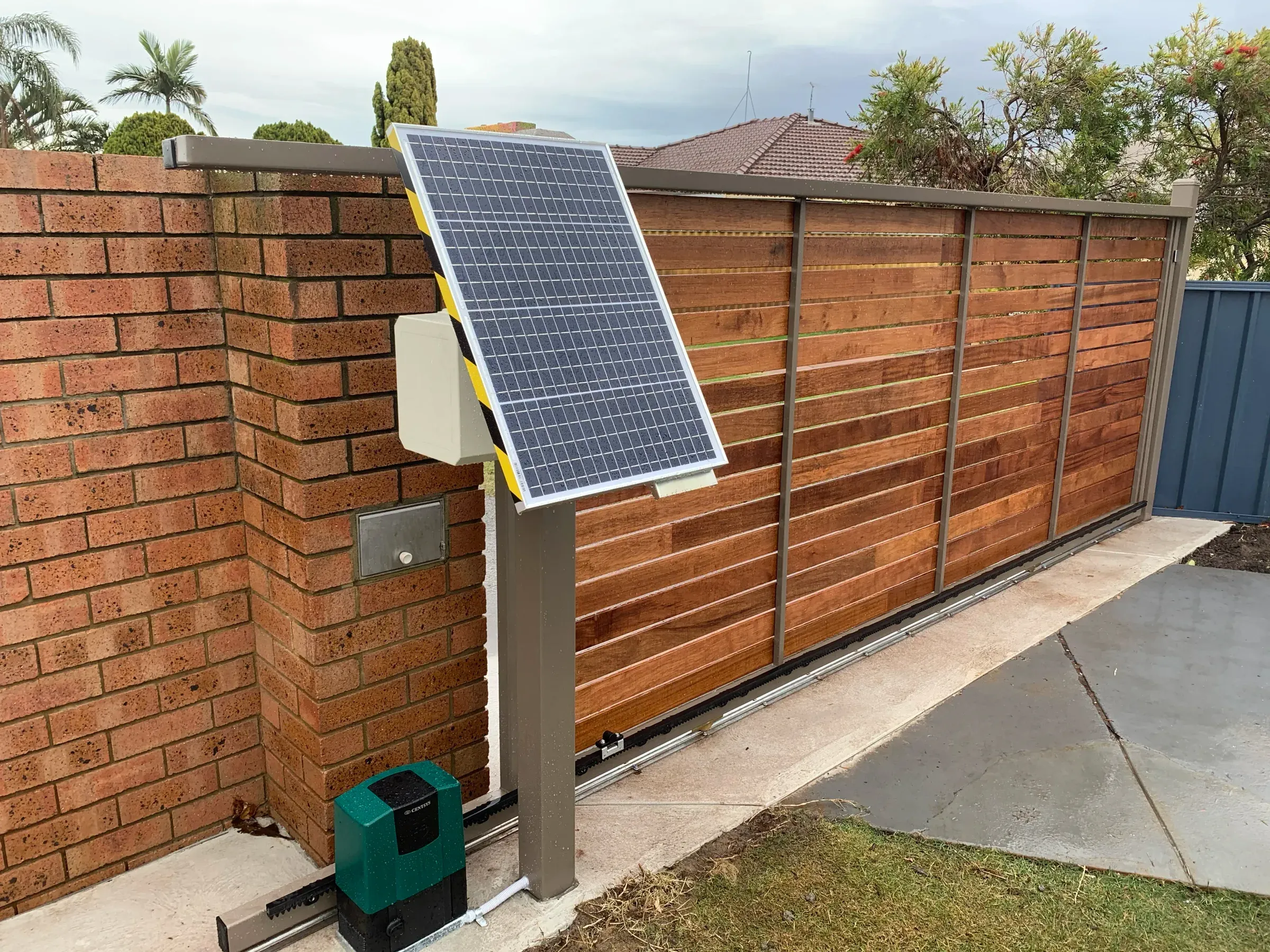
An automated gate needs three things people often do not budget for: a motor matched to the weight and type of the gate, a power supply to the gate position, and safety equipment so the gate cannot close on a person, a car or a pet. The motor is usually the least of it — running power to a front boundary can be the larger part of the job if there is a driveway between the meter box and the gate.
Then there is how you get in. Remote handsets are standard; keypads, intercoms and phone-based access are all options, and it is worth thinking about deliveries, visitors and how the gate behaves in a power cut before choosing. Every automated gate needs a manual release so it can be opened by hand when there is no power — that is not optional, and knowing where it is matters.
Automation can be added to an existing gate, but only if the gate and its posts are up to it. A gate that already sags or catches will do so more emphatically once a motor is driving it.
What you get
Included as standard
- Gate, posts, hinges, latching and all hardware
- Footings sized for the gate being hung, not for a standard fence post
- For automated gates: motor, safety equipment and manual release
- Setting up and testing the operation before we leave
Not included
- Electrical supply to the gate position where none exists
- Regrading or paving a driveway so a swinging gate can clear it
- Intercom cabling back to the house beyond the gate position
- Ongoing servicing of motors and hardware
Any of these can be quoted alongside the job — they are listed so the quote does not surprise you, not because we cannot do them.
Gates & automation we have done
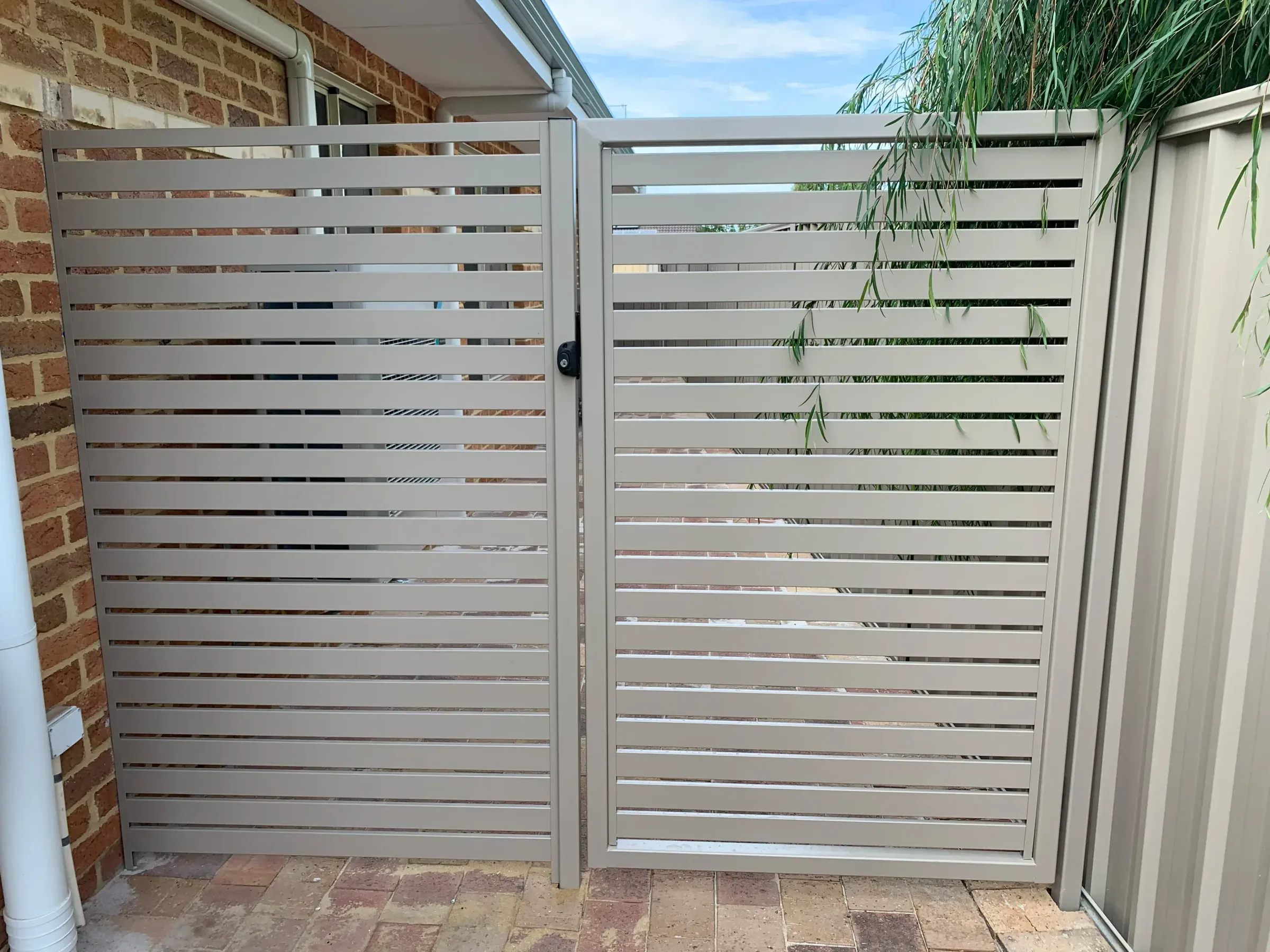
Aluminium slat double gate 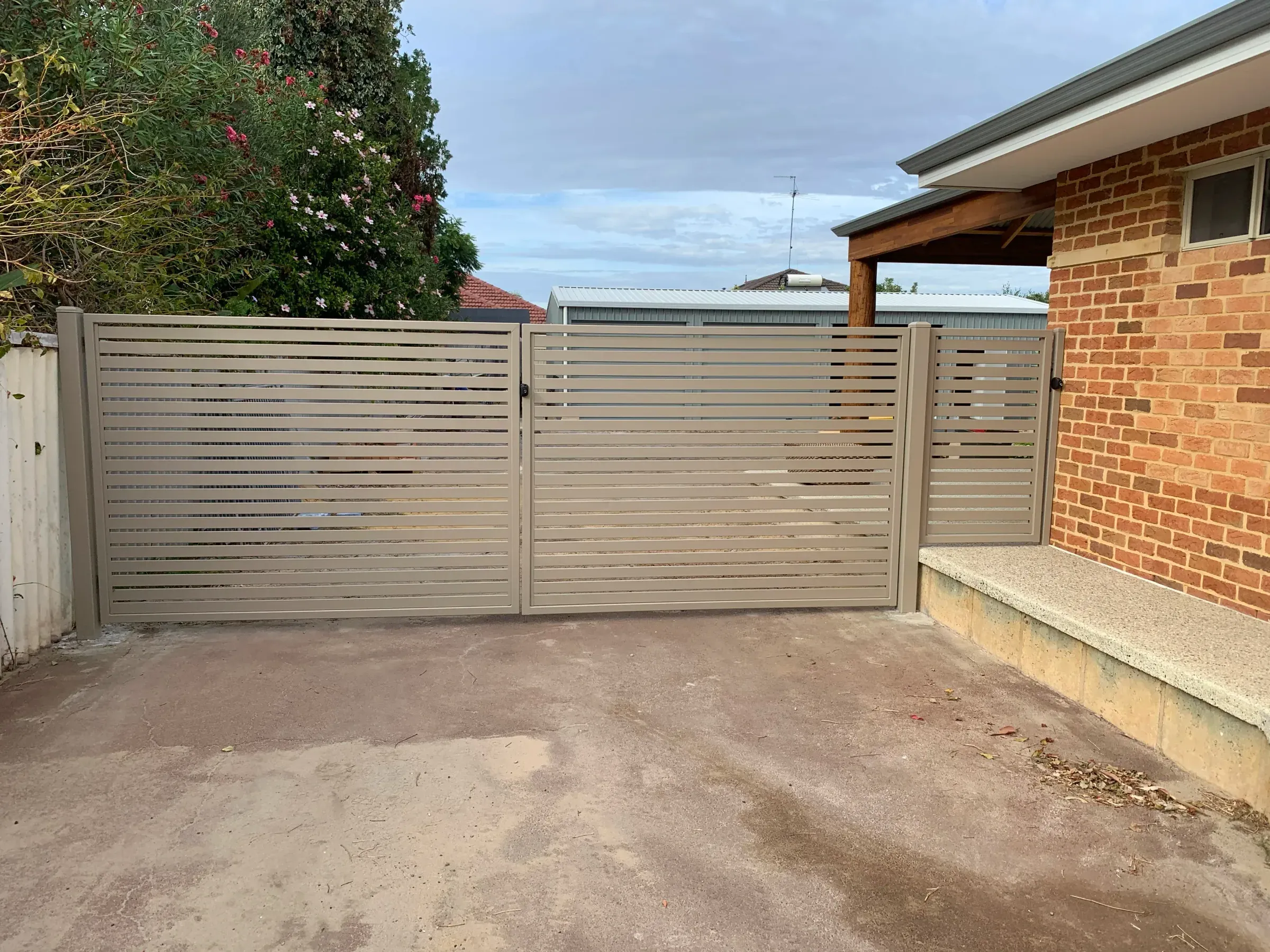
Slat gate with matching panels 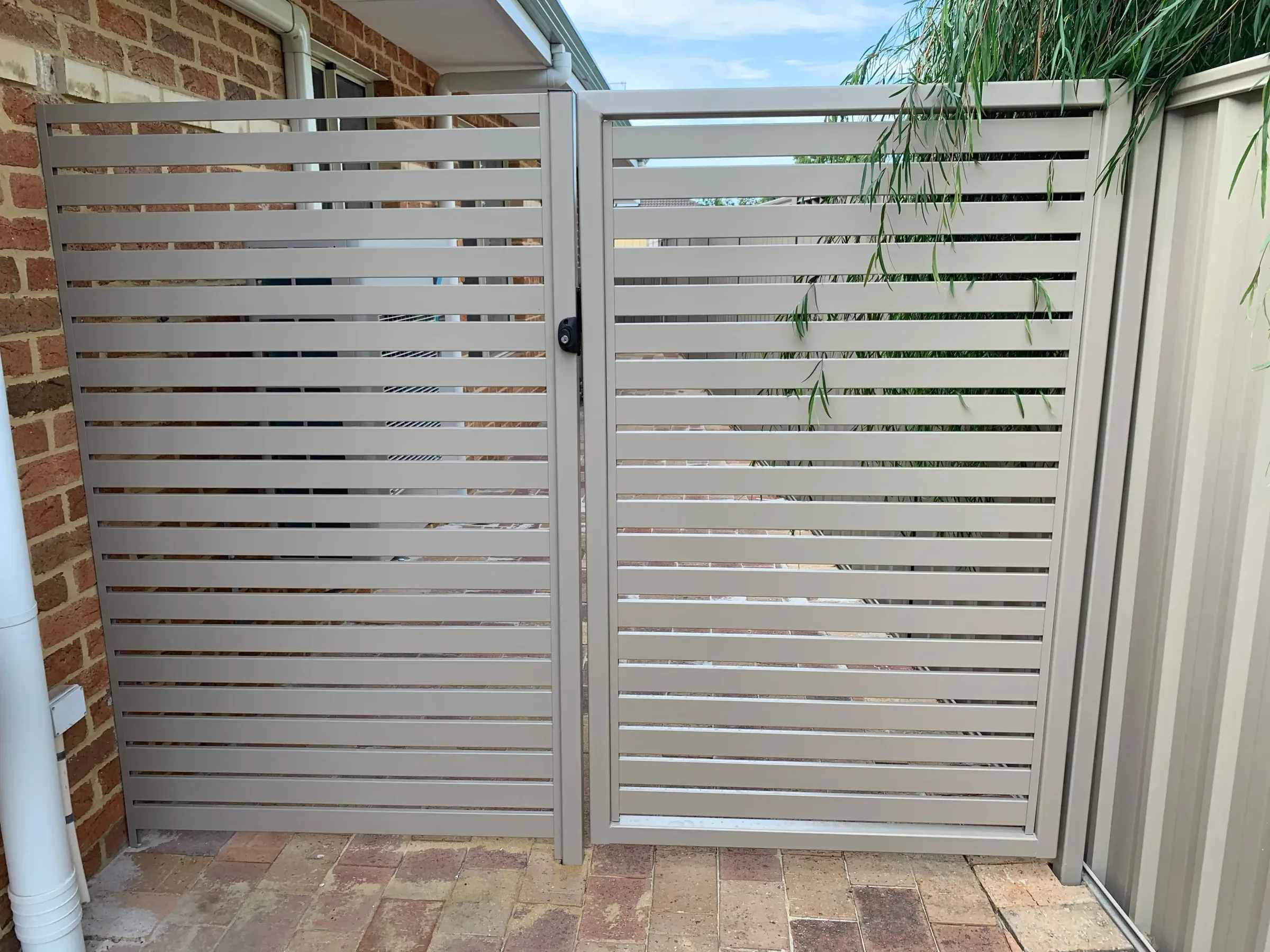
Slat side-access gate 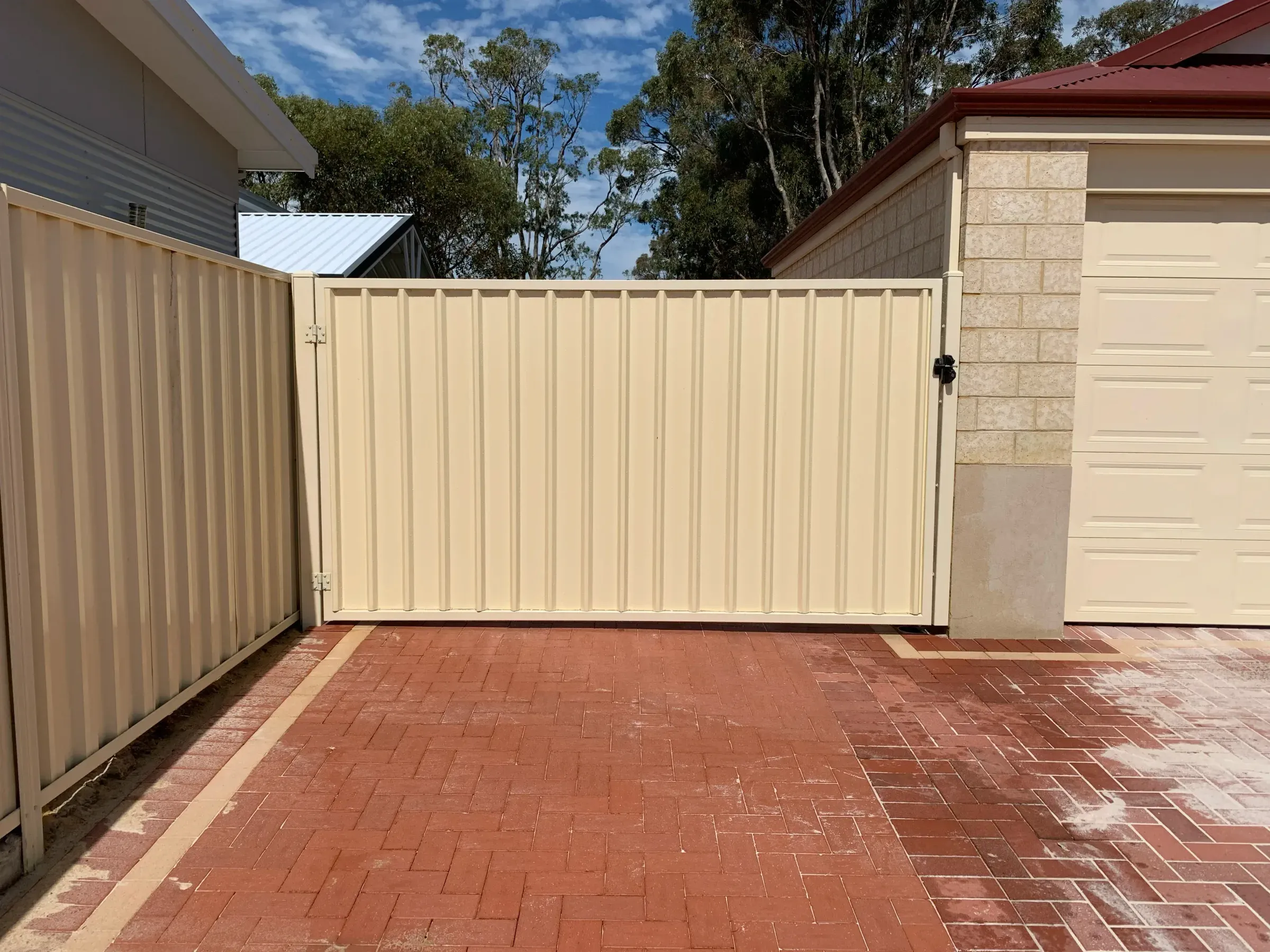
Cream Colorbond double gate 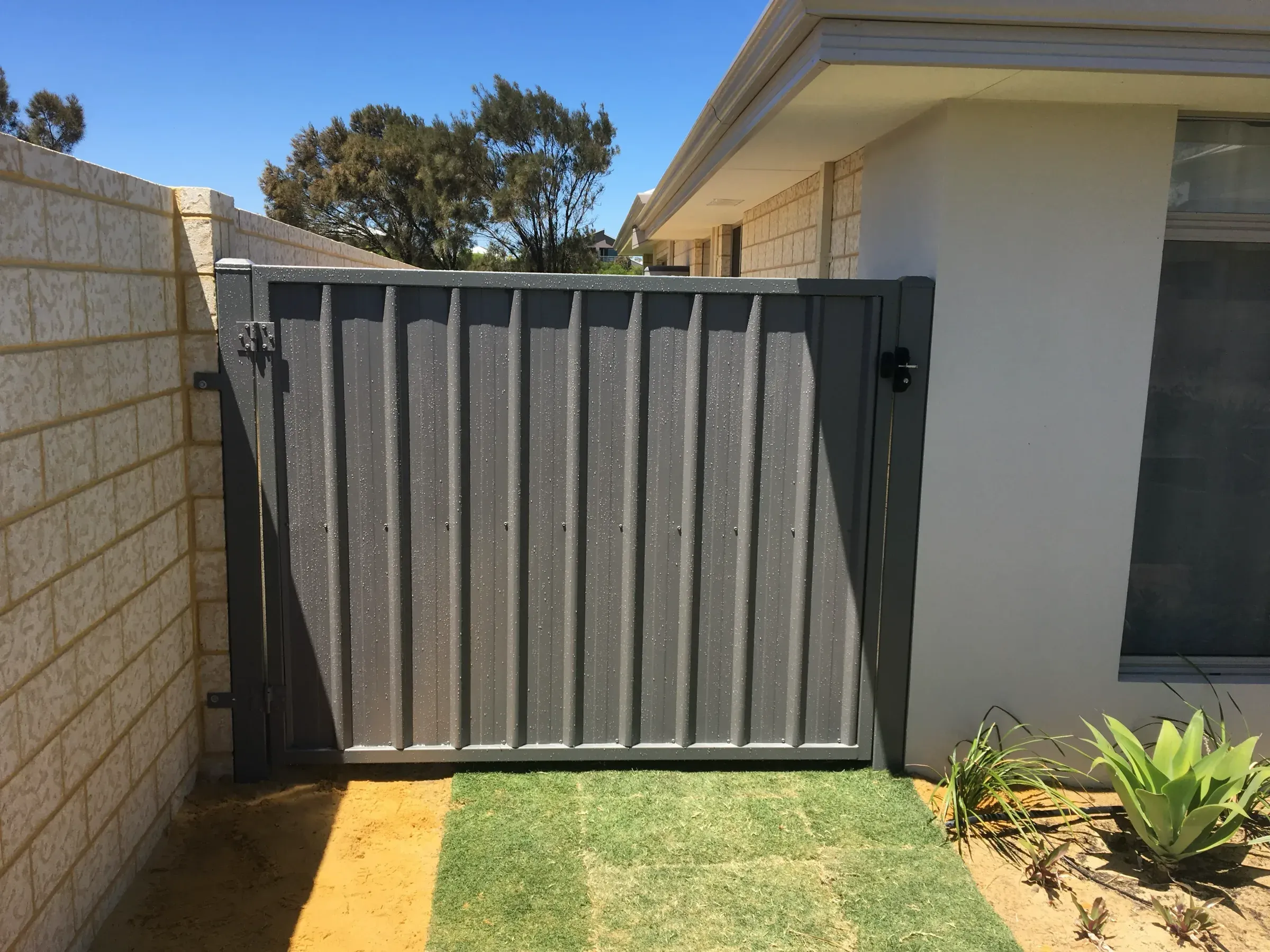
Colorbond side-access gate 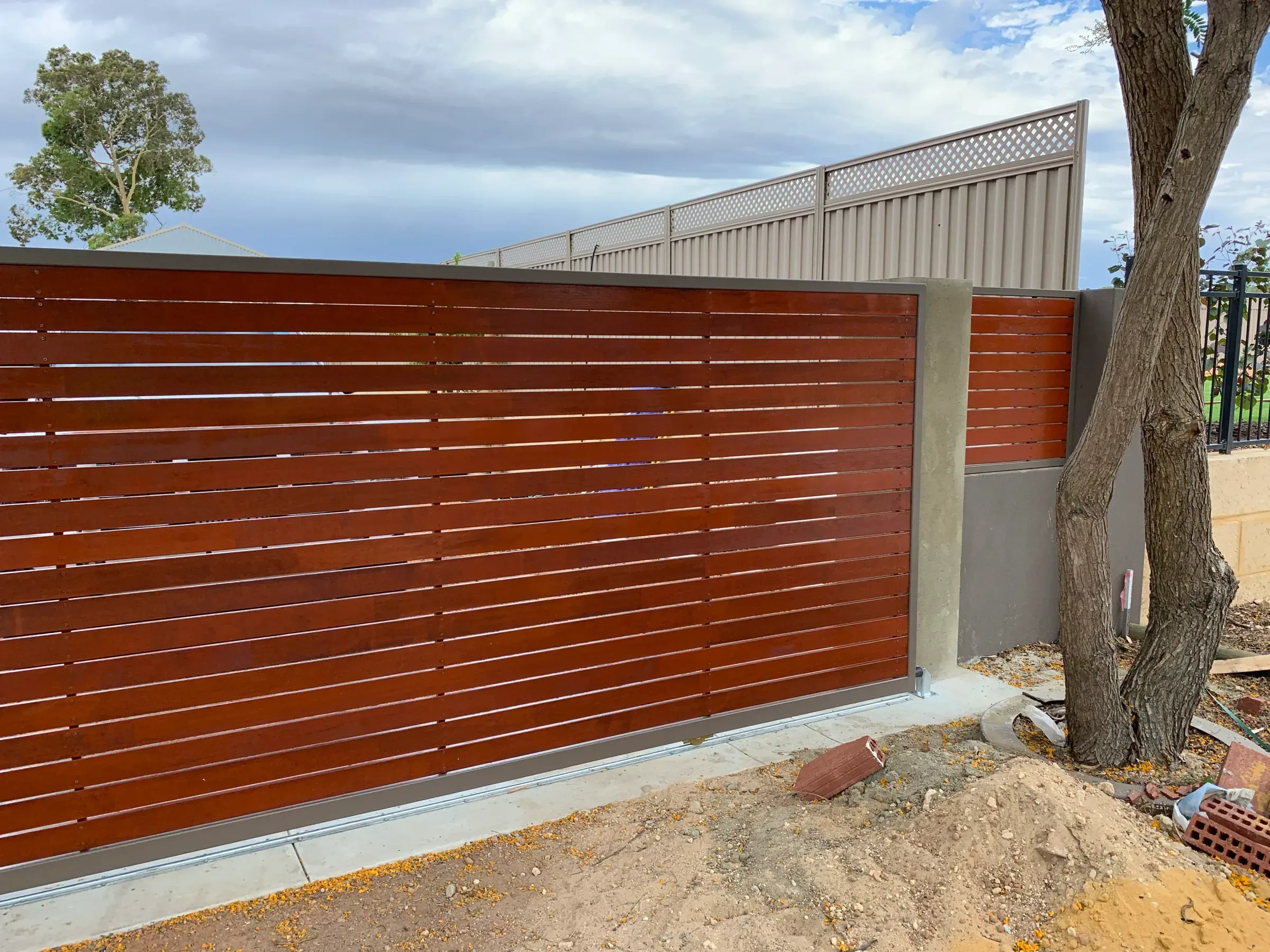
Merbau infill gate 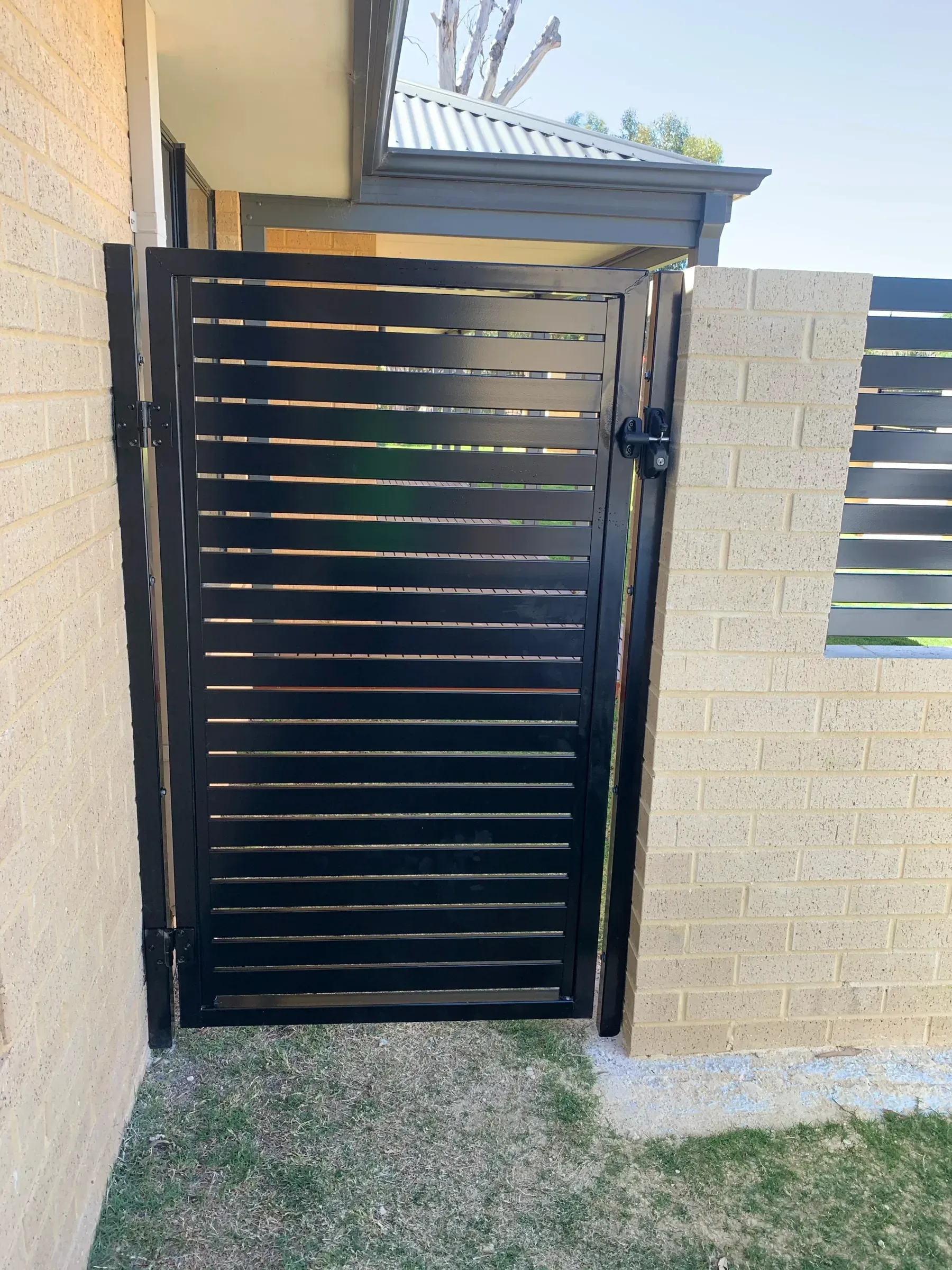
Slat gate in a limestone wall 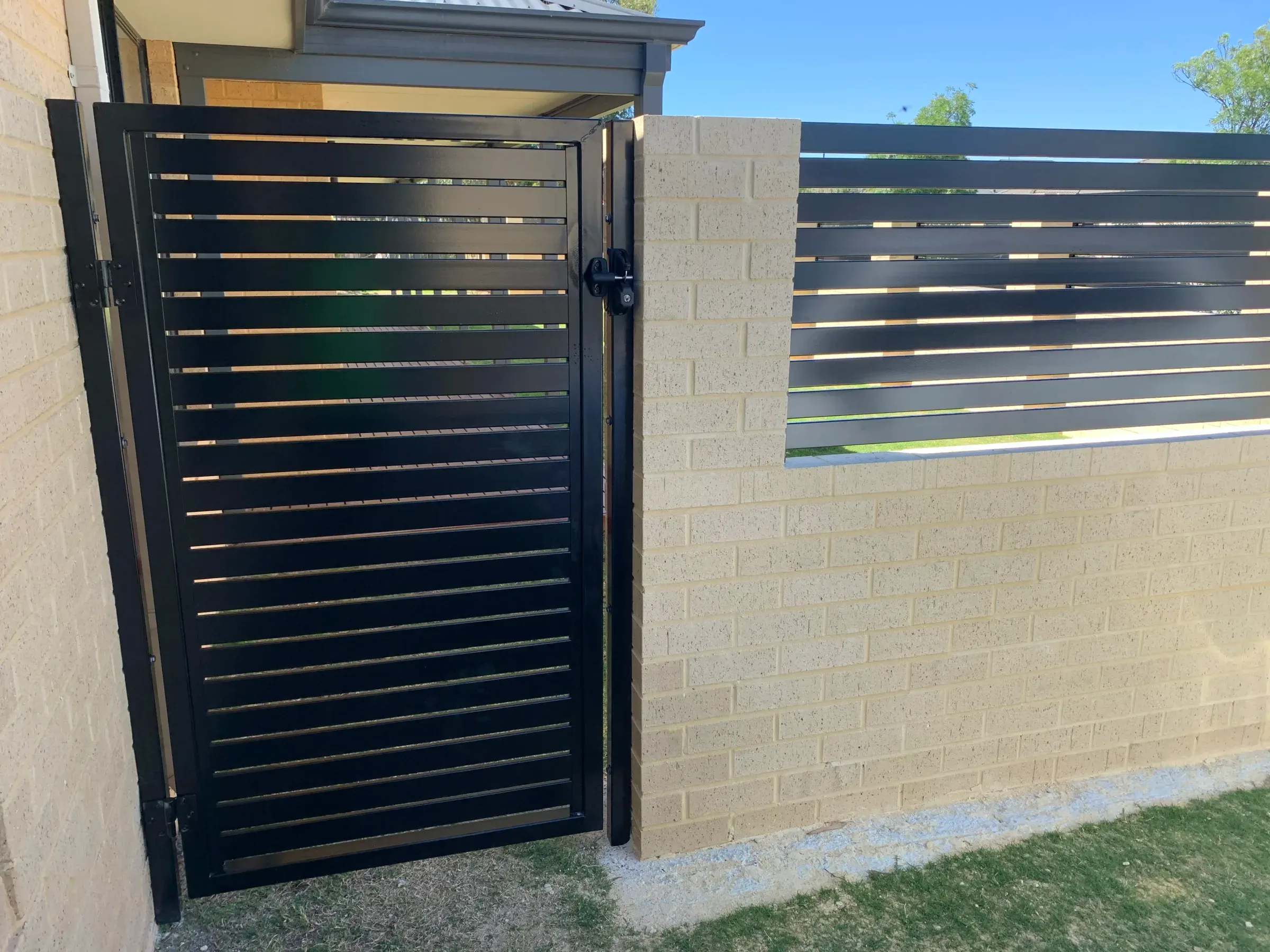
Slat gate and wall topper 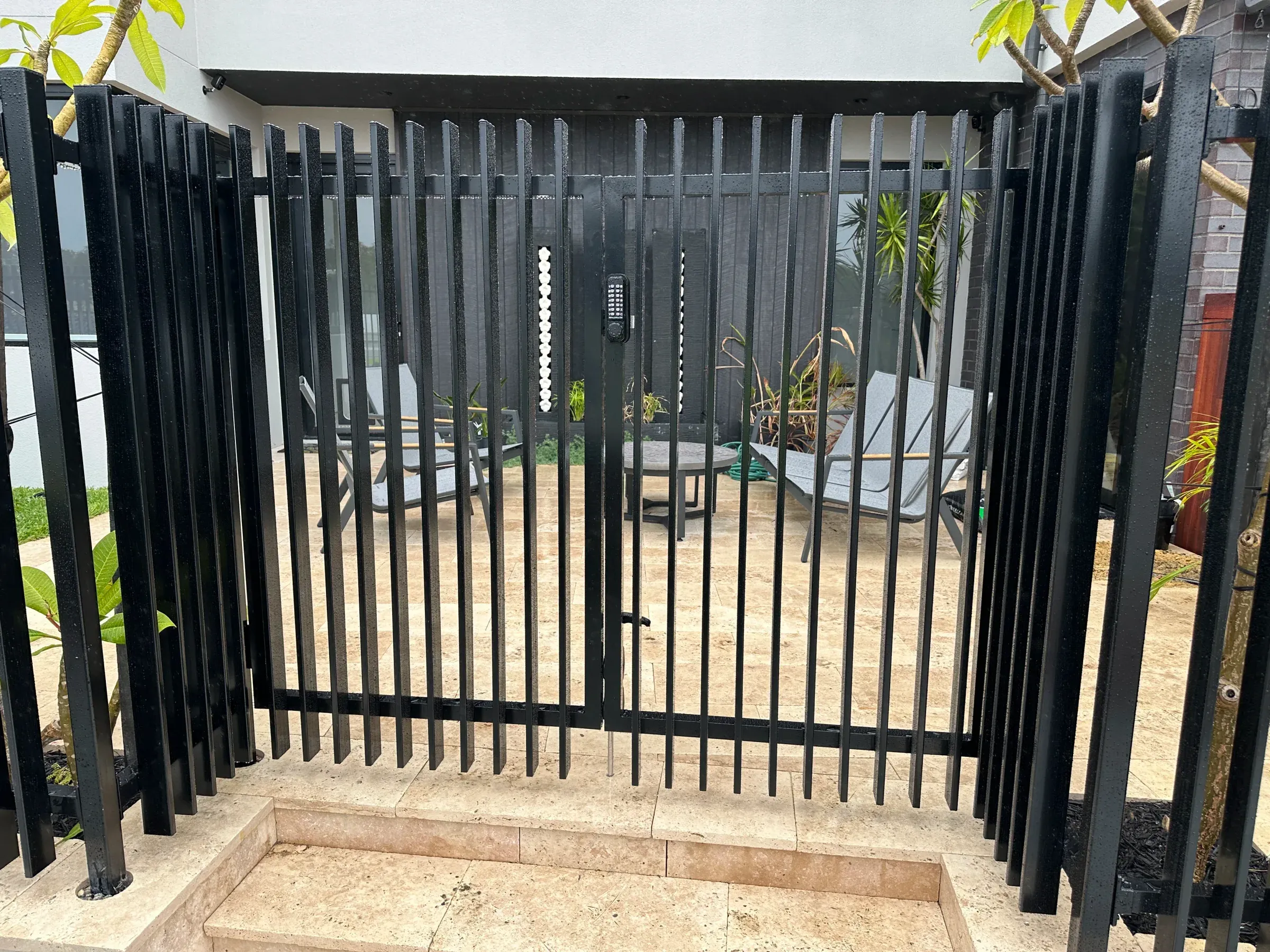
Tubular gate, courtyard
What affects the cost
Width and weight set almost everything. A wider gate needs a heavier frame, which needs a bigger post and a bigger footing, which needs a stronger motor if it is automated. The cost does not scale in a straight line with the opening.
Type matters next: a single pedestrian gate, a double gate across a driveway and a sliding gate are three different jobs. Sliding gates need the run-off space and a track or cantilever arrangement.
For automation, the motor is often not the biggest line. Getting power to the gate is, particularly where it means going under a driveway. Access control — remotes, keypad, intercom — is priced on what you choose.
How it works
You get in touch
Tell us what needs doing — a photo helps more than a paragraph. We come back to you within 2 business days.
We measure it up
We come to the property, walk the job with you and measure properly. The measure is free, with no obligation.
You get it in writing
An itemised written quote — materials, labour and removal priced separately, so you can see what you are paying for. It holds for 30 days.
We book it in and do it
We agree a date, turn up on it, and take the mess with us when we go. The site is left clean.
Common questions
Can you automate my existing gate?
Often, but the gate and its posts have to be up to it. A motor is unforgiving of a gate that already drops, catches or racks, and it will make an existing problem worse rather than hide it. We will tell you honestly if the sensible answer is a new gate rather than a motor on an old one.
What happens in a power cut?
Every automated gate has a manual release so it can be opened by hand. Part of handover is showing you where yours is and how it works — it is worth knowing before you need it rather than after.
Sliding or swinging?
It usually comes down to space and slope. Swinging gates need a clear, level arc; sliding gates need roughly the opening width again alongside the fence. On a driveway that rises from the street, sliding is often the only thing that works properly.
Do you repair gates as well as install them?
Yes — dropped gates, worn hinges, latches that no longer catch and motors that have stopped are all ordinary jobs. Send a photo with your enquiry and it helps us work out what is involved.
Do I need power run to the gate?
For an automated gate, yes, and it is worth knowing early because it can be a significant part of the cost — especially where the cable has to cross a finished driveway. Solar is sometimes an option depending on the gate and how often it operates.
We also do
Putting in a fence? The retaining wall underneath it, the reticulation that has to be moved for the post holes, and the paving that runs up to it can all be sorted at the same time — one crew, one schedule.
Landscaping
Lawn and artificial grass, reticulation and repairs, garden maintenance, clean-ups, mulching and planting — across Mandurah, Peel and north to Rockingham.
Paving & Patios
Paving, patios and decking, retaining walls, concrete paths and curbing, and soakwells — built for sandy ground and coastal weather, across Mandurah and Peel.
Tell us what needs doing.
A written, itemised quote after we have measured the job — not a number guessed over the phone.