
Colorbond fencing in Mandurah
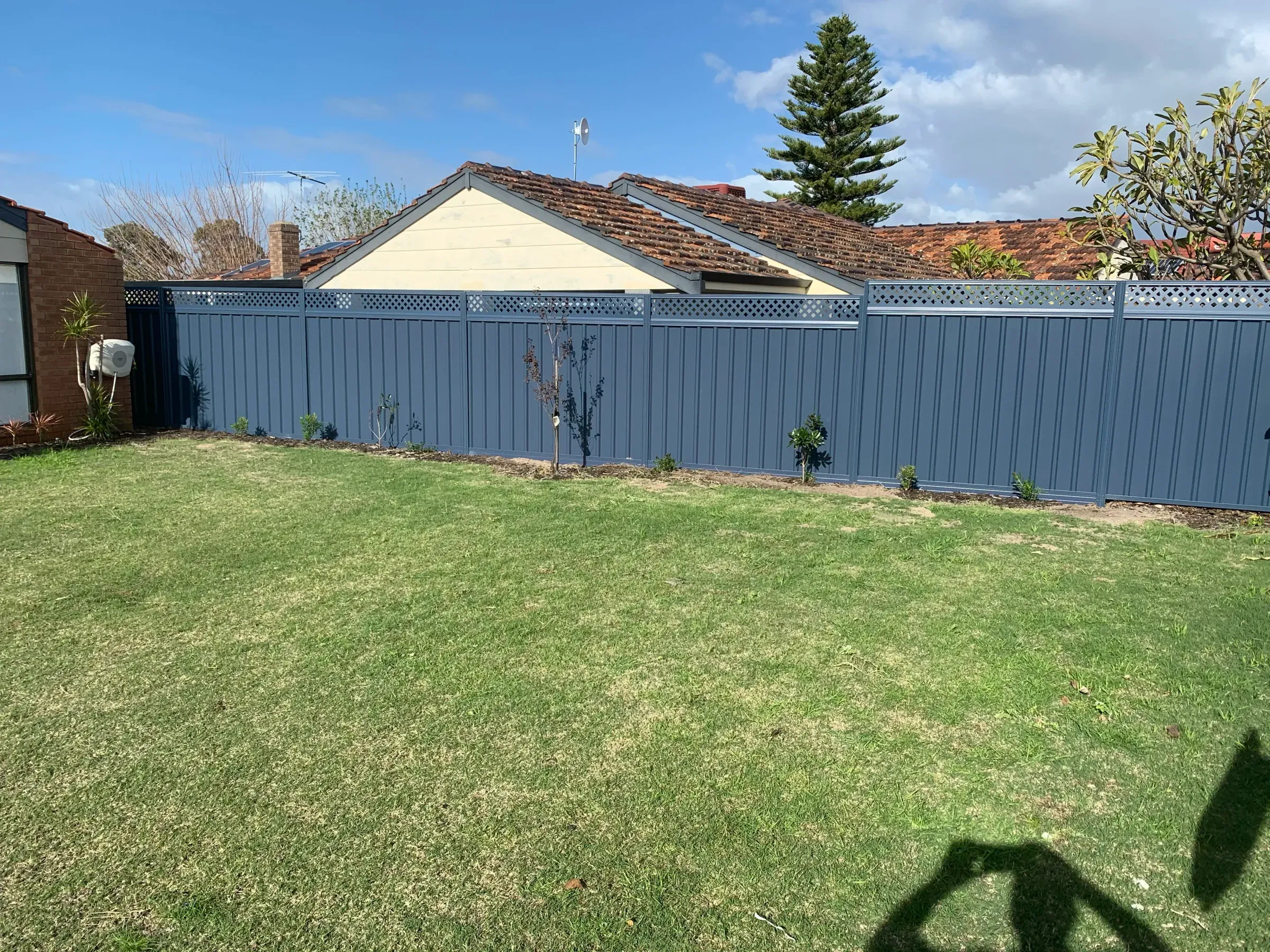
The default boundary fence on a coastal block, and for good reason — pre-finished steel that never needs painting and takes the sea breeze as one panel rather than as loose palings.
- Starts from
- $120 per metre + GST
- Old fence
- Removed and taken away
- Material
- Pre-finished Colorbond steel
About colorbond fencing
Why Colorbond suits Mandurah
Colorbond is steel that arrives already finished, which is the whole point of it. There is no painting when it goes up and no repainting in five years, and the colour is baked on rather than sitting on the surface waiting to flake. On a coastal block where salt air is working on everything all year, a fence you never have to maintain is worth more than one that looks slightly better for the first two summers.
The second reason is wind. A Colorbond run is a continuous sheet fixed into rails and posts, so it takes a sea breeze as one structure. Timber palings are dozens of separate pieces, each with its own fixings, each of which can work loose — which is why old timber fences around here tend to fail progressively rather than all at once, with a rattle before a lean before a collapse.
Colours, heights and what to pick
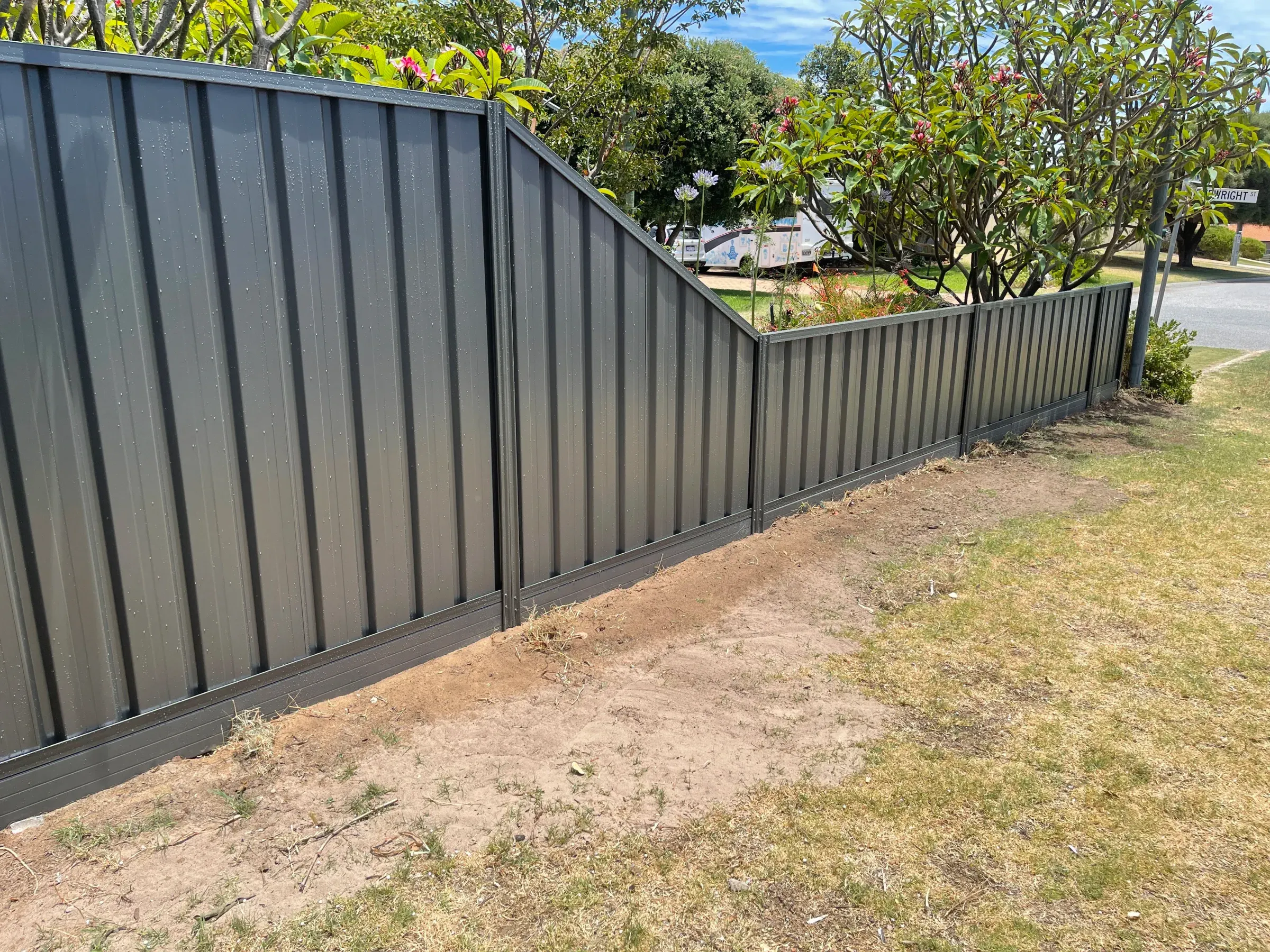
The standard Colorbond fencing range covers the usual neutral greys, greens and creams, and the practical advice is to look at a sample against your own house in daylight rather than choosing from a chart. Darker colours look sharper and show less dirt; they also get noticeably hotter in full sun, which matters if the fence is close to something you sit next to.
Height is usually set by what the fence is doing. A standard boundary fence between two properties is one conversation; a fence screening a road, hiding a bin area, or giving privacy from a two-storey neighbour is another, and heights above the standard can involve your local authority. We will tell you at the measure if what you are asking for needs approval.
Footings, sand and slope
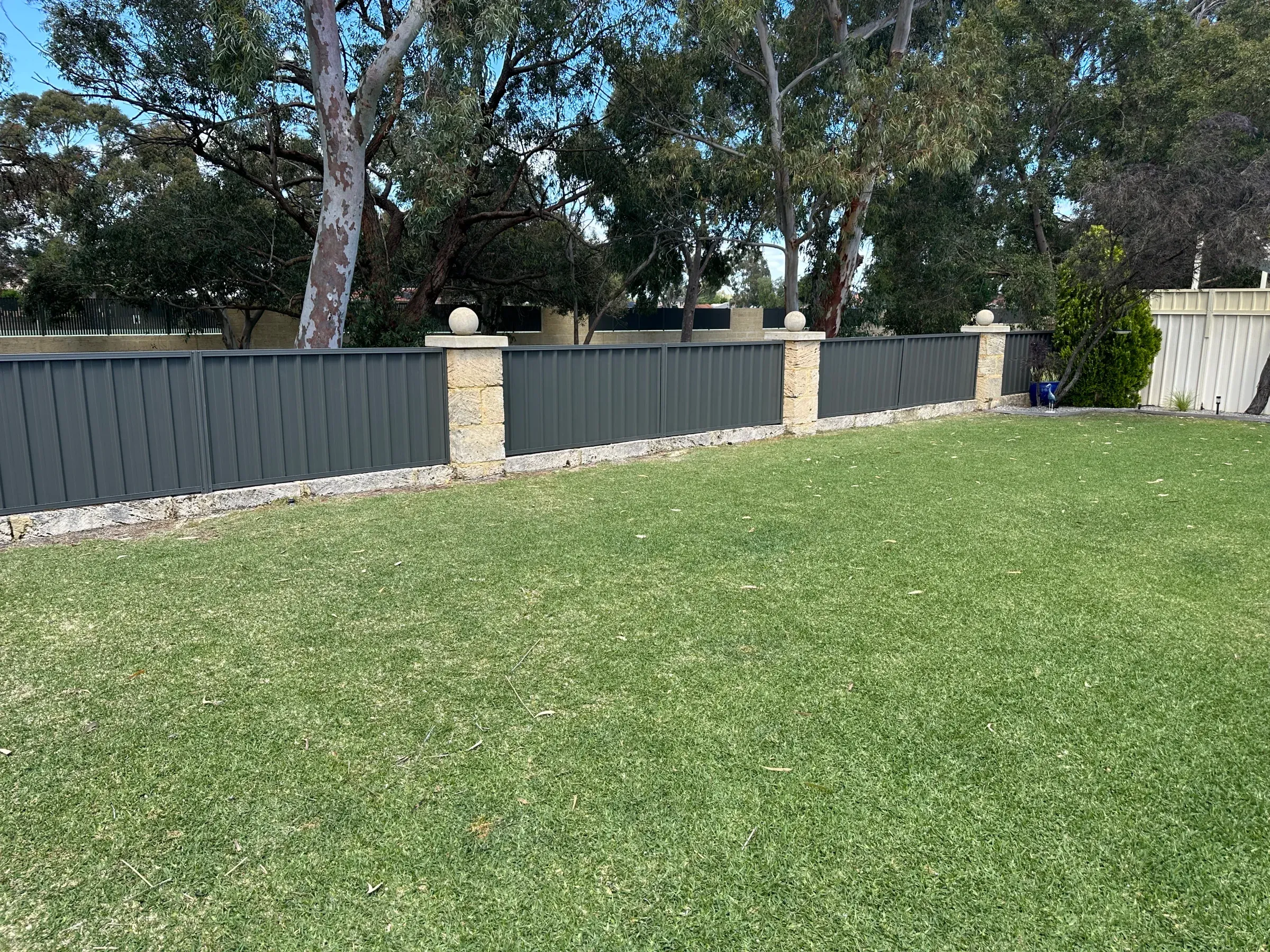
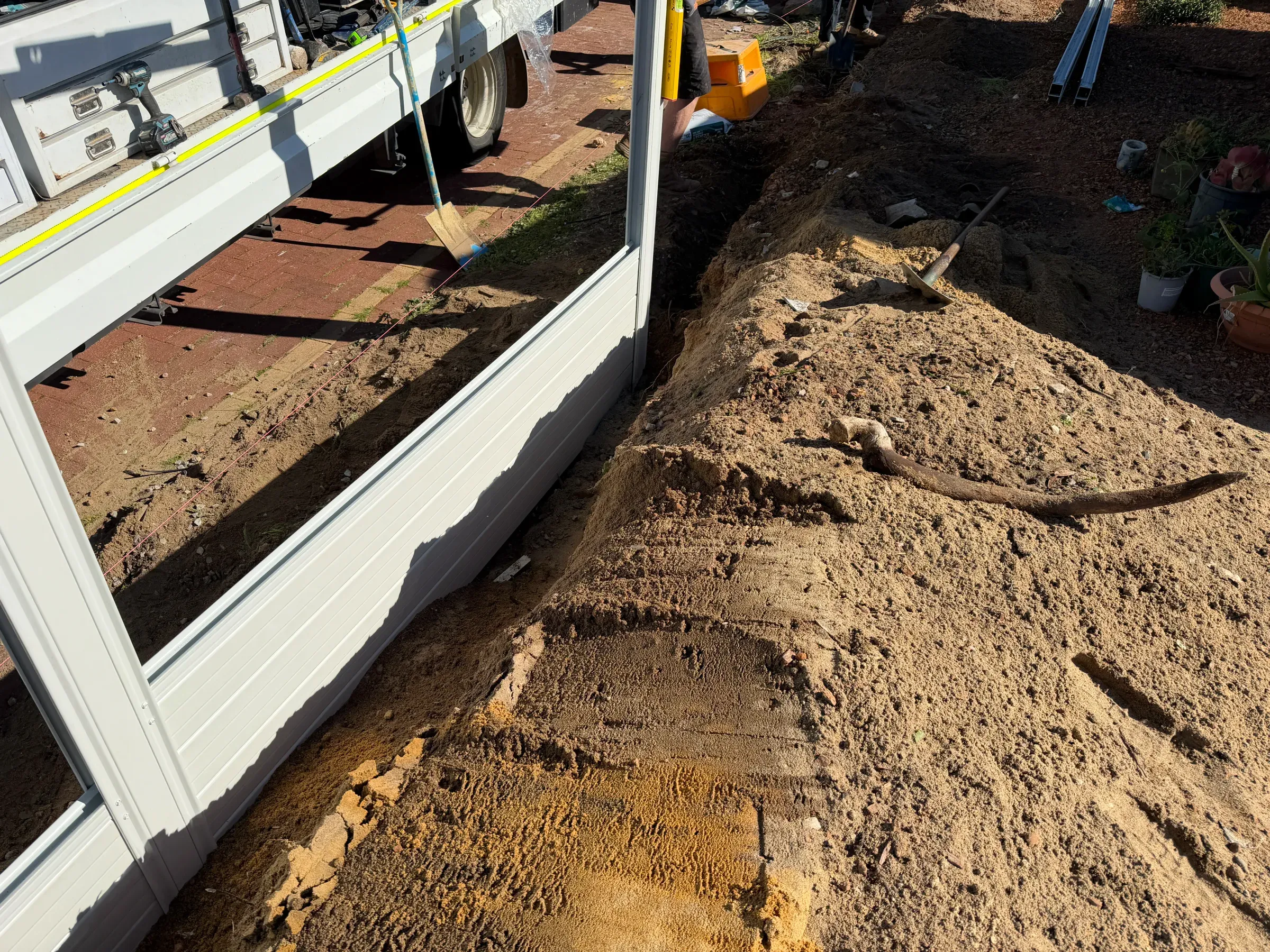
The part of the job you never see is the part that determines whether it stays straight. In loose coastal sand a post needs more depth and more concrete than the same post in heavier ground, because there is less around it doing the work. Where limestone comes up close to the surface the problem inverts — excellent support once you are in, but getting in can mean coring rather than digging.
Slope is the other variable. A fence on a falling boundary is either stepped, which gives a level top to each panel and leaves triangular gaps at the bottom, or raked to follow the ground, which keeps the bottom tight but sets the panels on an angle. Neither is wrong. Which one suits depends on how much the ground falls and whether anything needs to be kept in or out at the base.
Replacing an existing fence
Most Colorbond jobs around Mandurah are replacements rather than new boundaries, which means the old fence has to come out first. That is part of the job: we take it down, take it away and dispose of it, and it appears as a line on your quote rather than as a surprise afterwards. You do not need to book a skip or make a tip run.
If the old fence is shared with a neighbour, it is worth having that conversation before anything is ordered — under the Dividing Fences Act 1961 (WA) adjoining owners are generally liable to share the cost of a sufficient dividing fence. We can give you a written quote you can show them, which is usually what moves it forward.
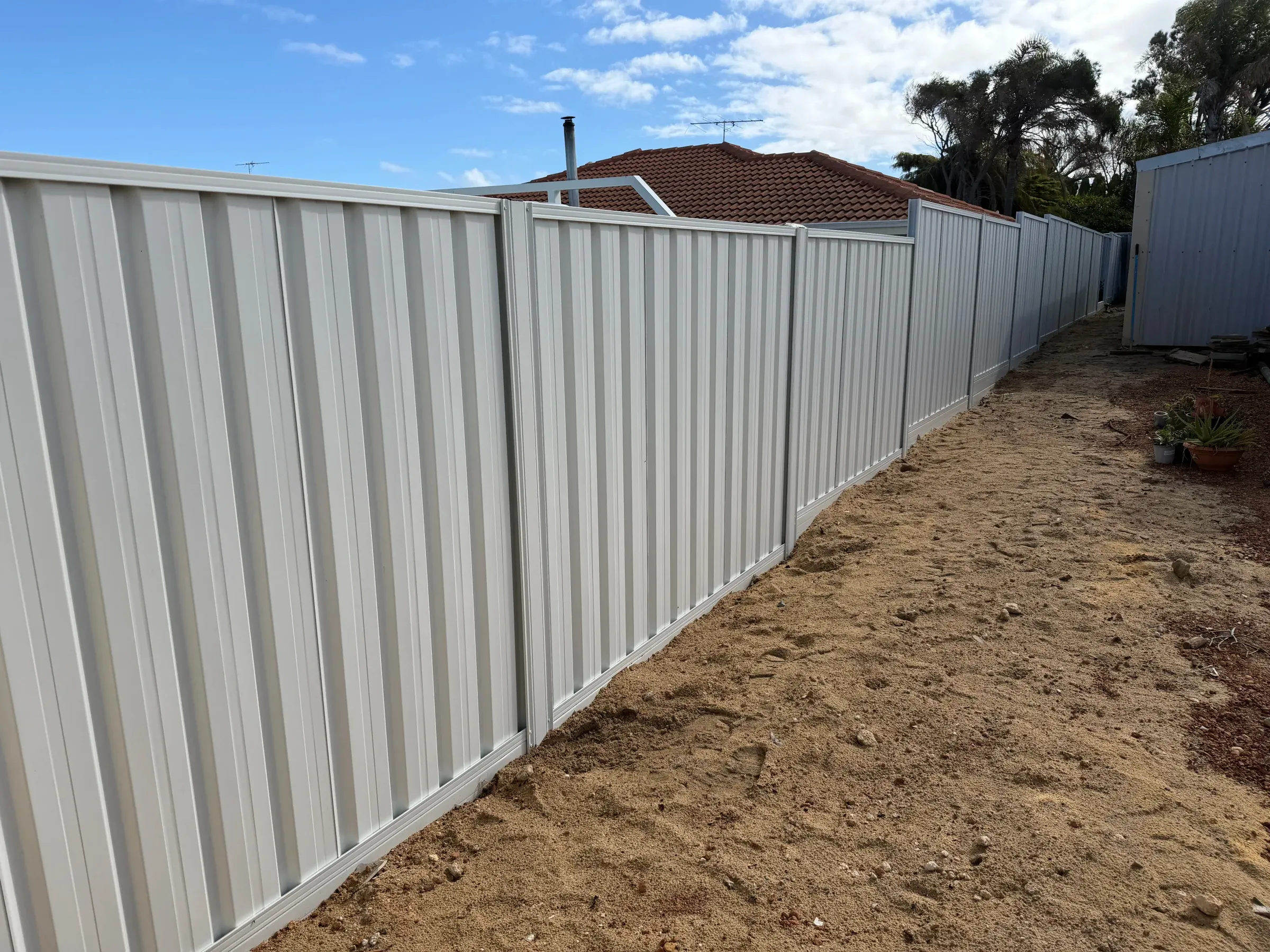
What you get
Included as standard
- Removal and disposal of the old fence
- Footings dug and concreted to suit the ground on your block
- Posts, rails, sheeting and all fixings
- Site left clean, offcuts and packaging taken with us
- A written itemised quote you can show a neighbour
Not included
- Retaining walls, where the ground needs holding before a fence can sit on it
- Relocating reticulation lines that run through the fence line
- Council approval fees, where a height or location needs them
- Removal of trees, stumps or structures in the way of the run
Any of these can be quoted alongside the job — they are listed so the quote does not surprise you, not because we cannot do them.
Colorbond fencing we have done
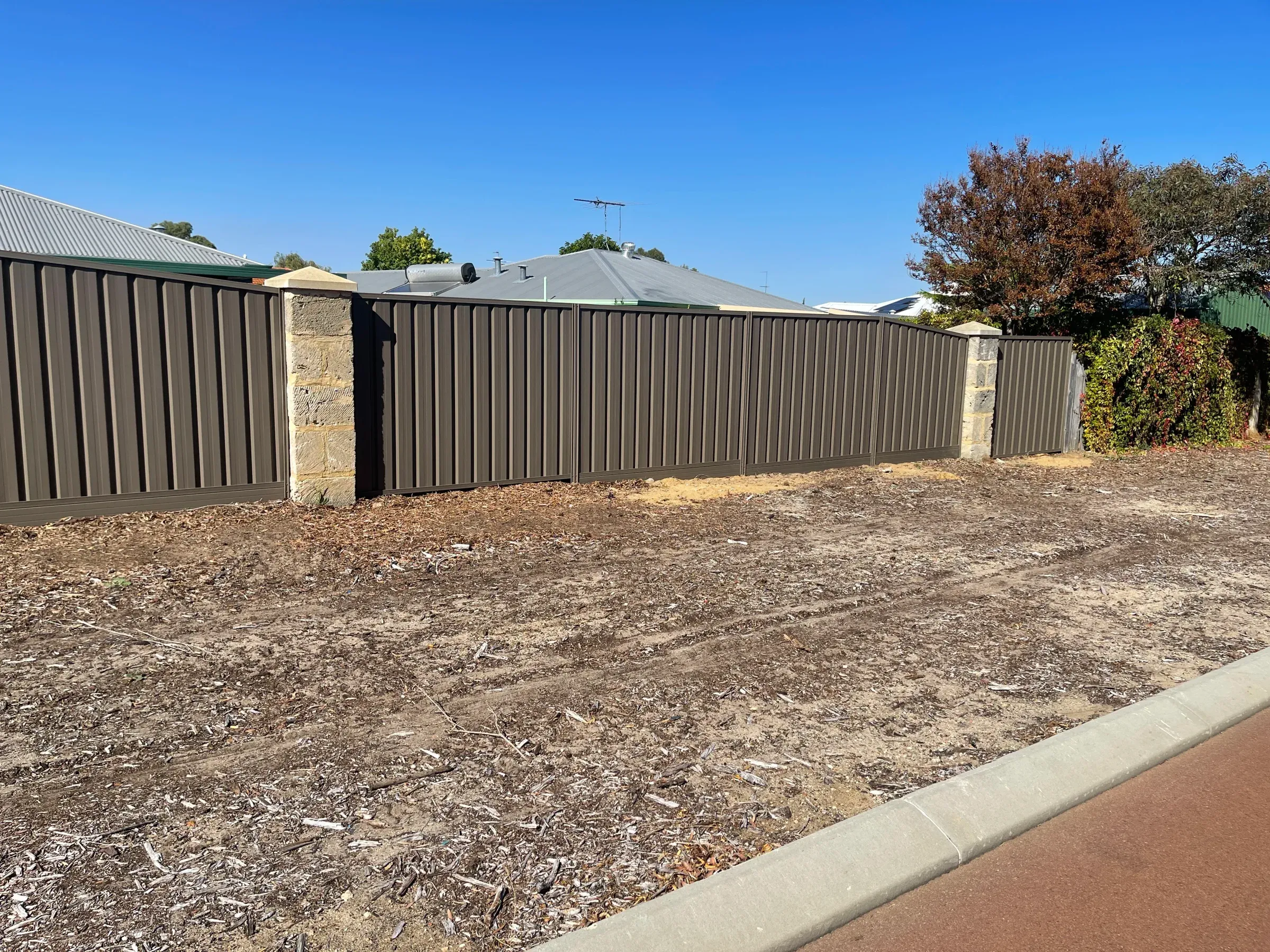
Dark Colorbond, front boundary 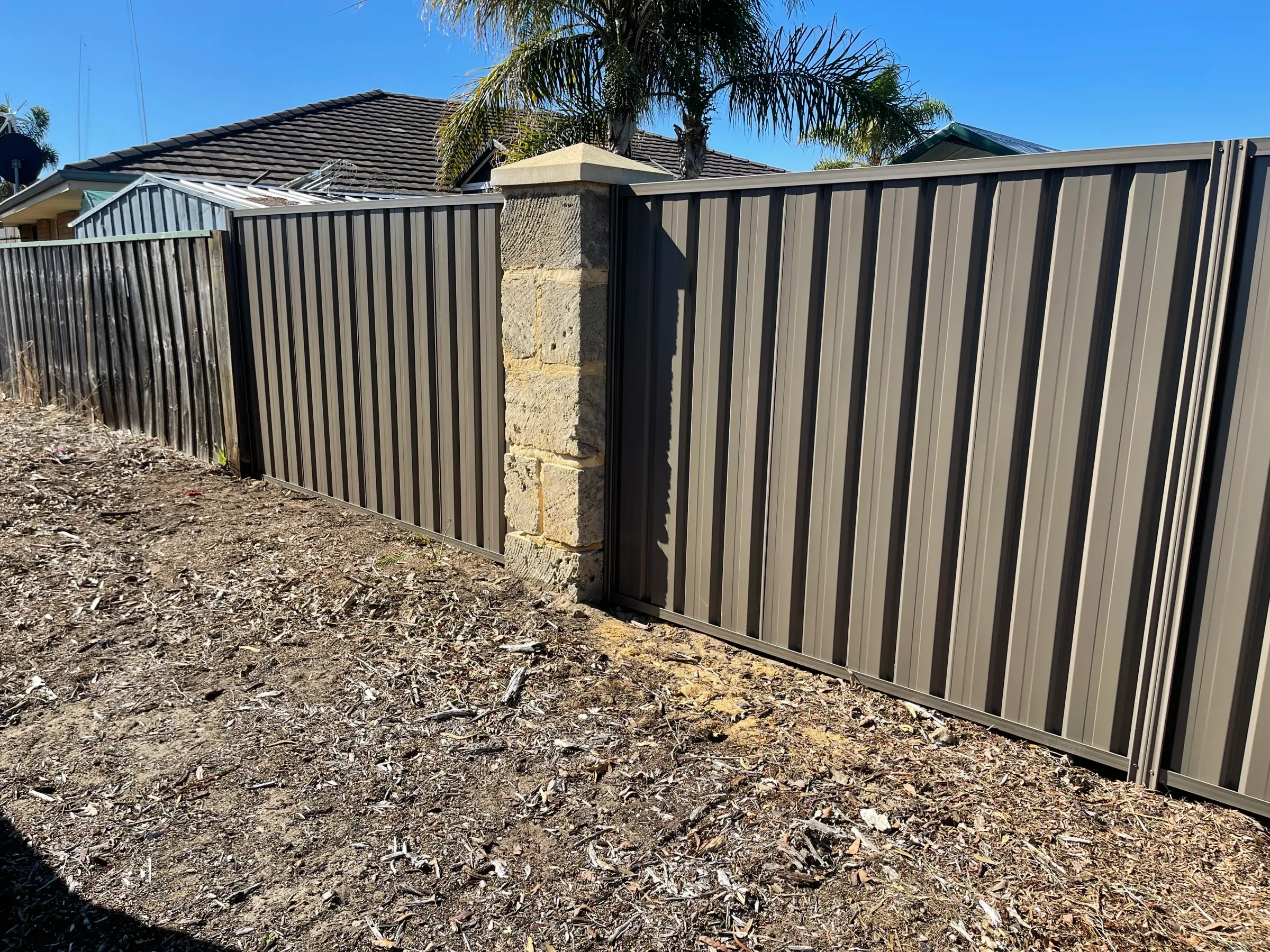
Dark Colorbond, limestone pier 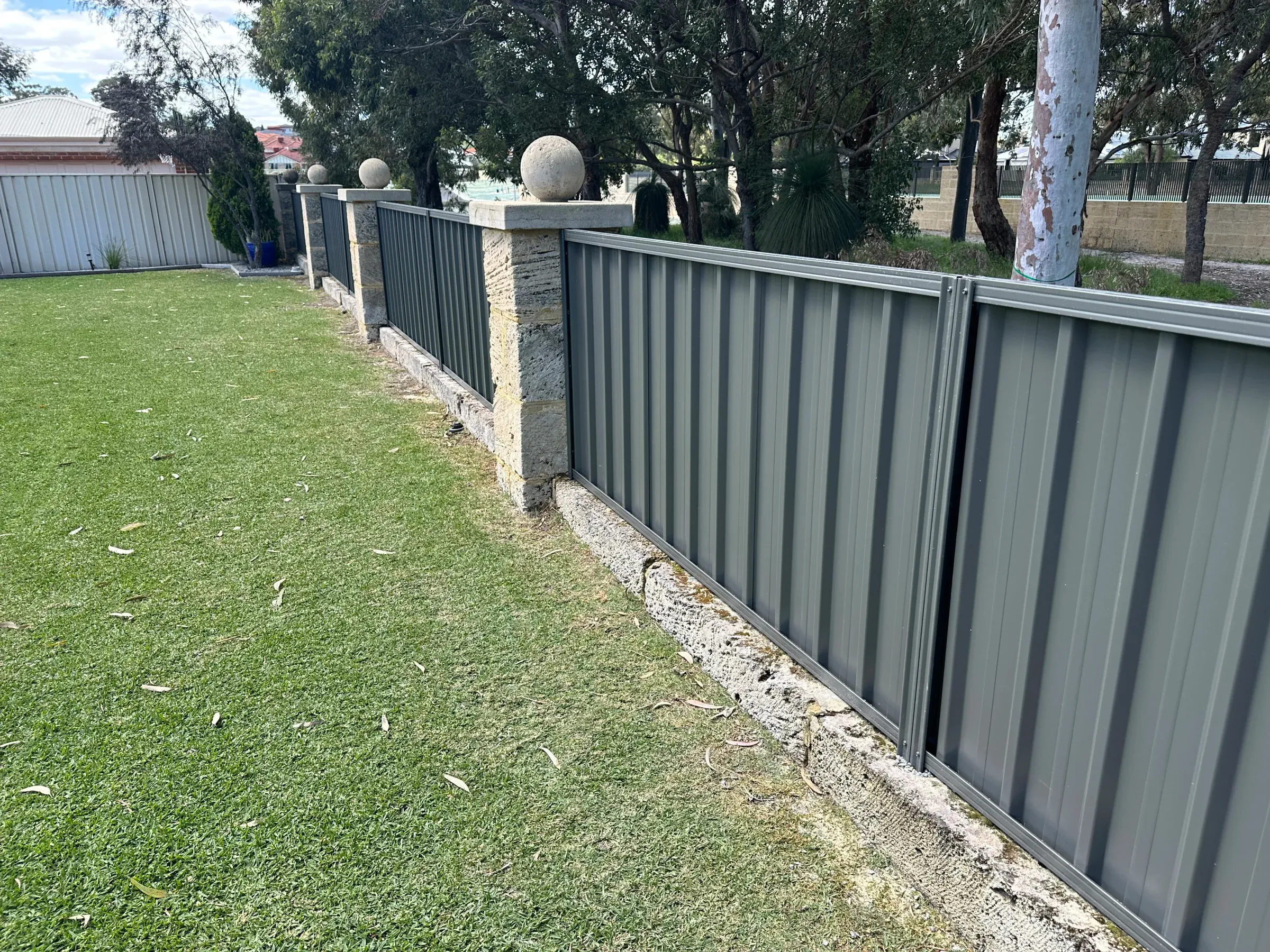
Colorbond and limestone, stepped run 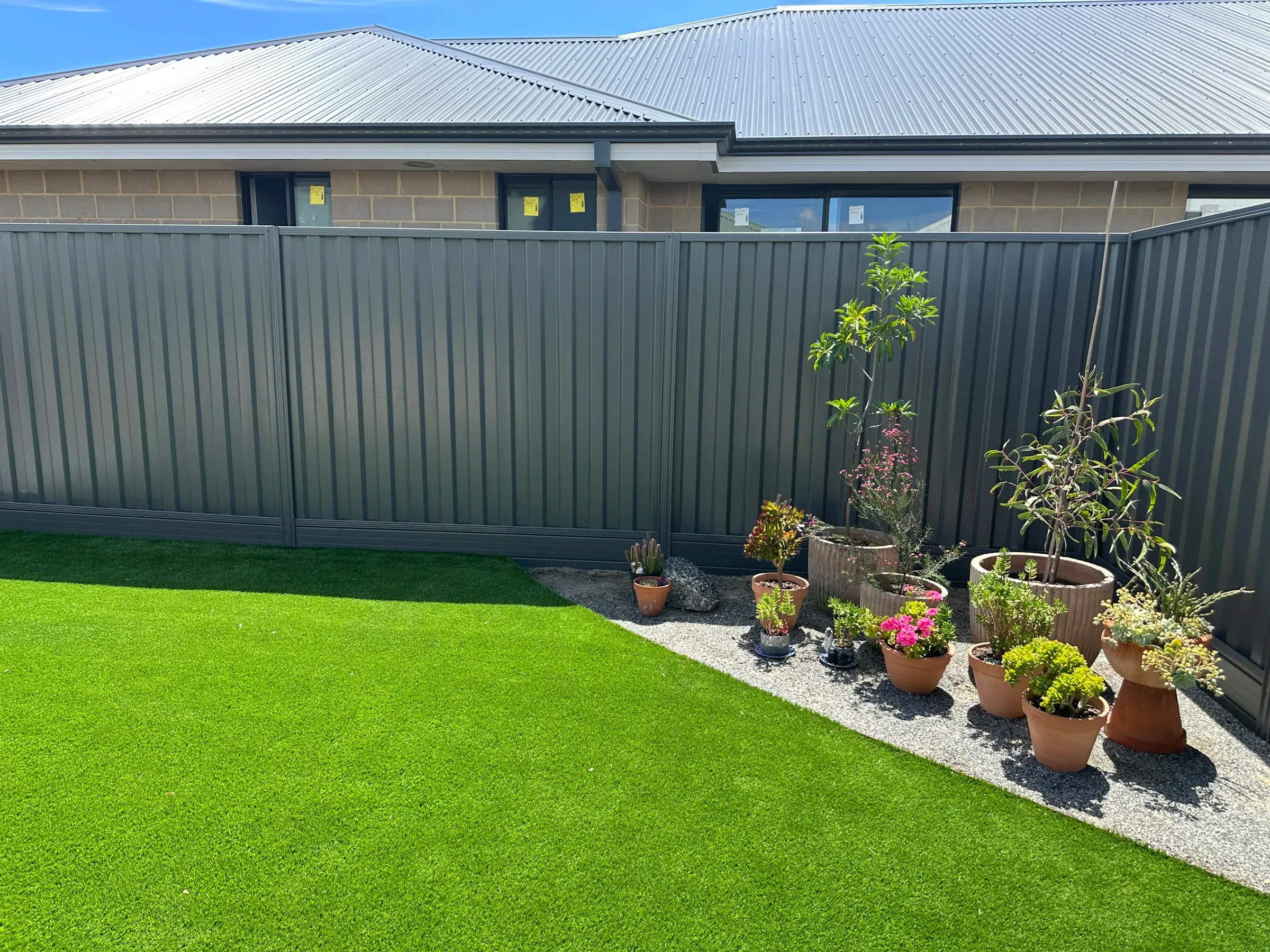
Grey Colorbond behind a planted bed 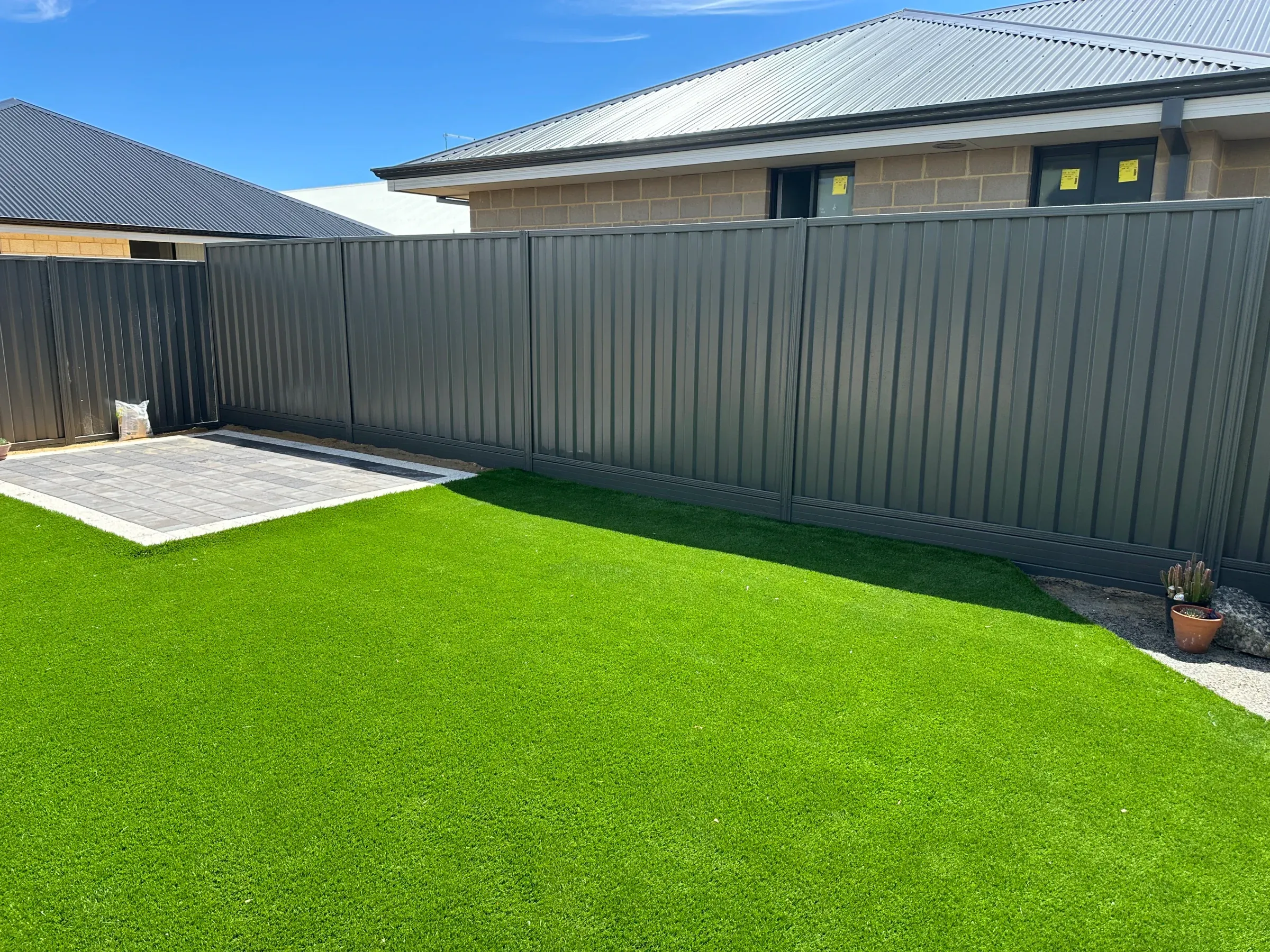
Grey Colorbond, courtyard boundary 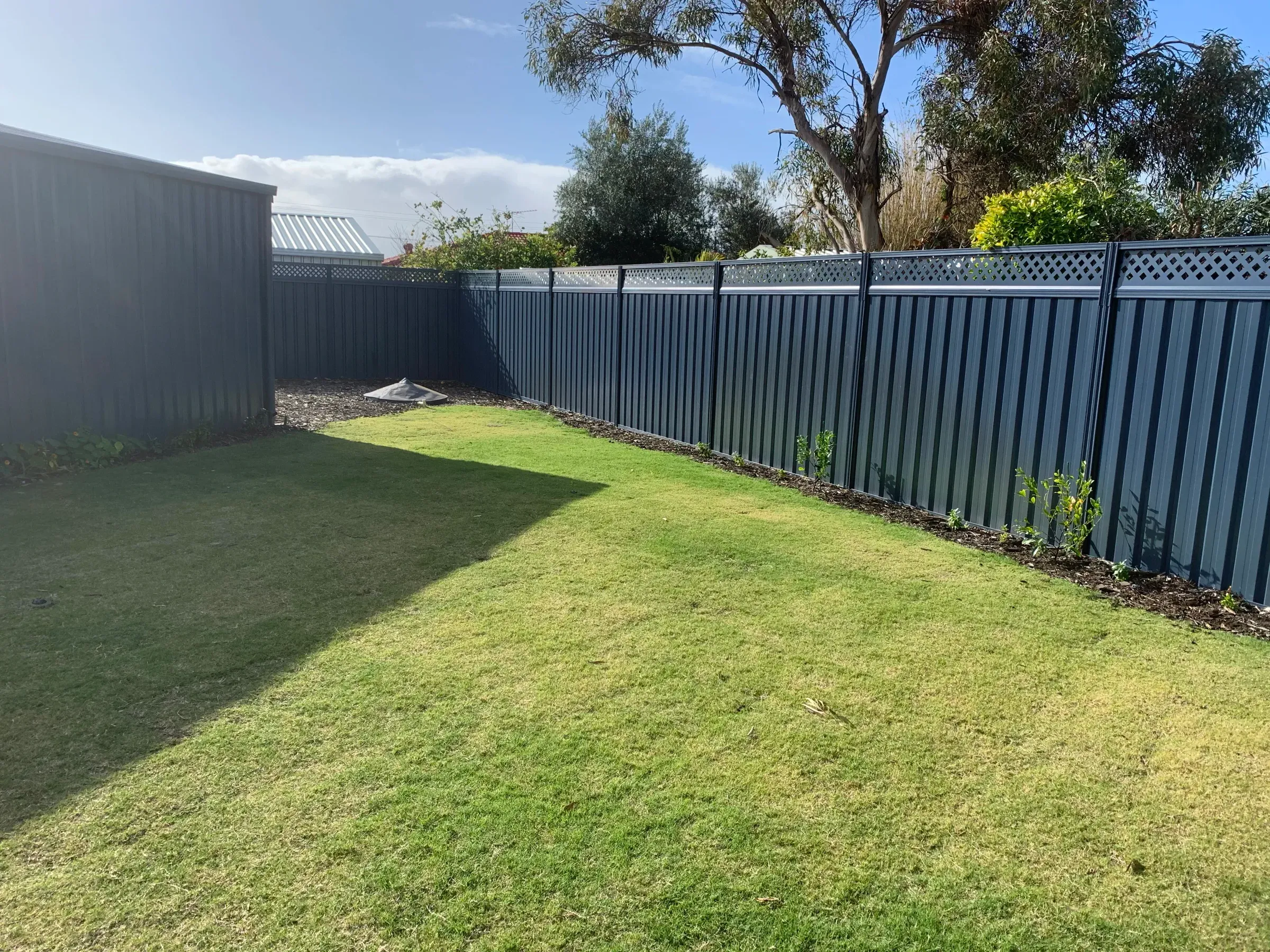
Grey Colorbond, full rear run 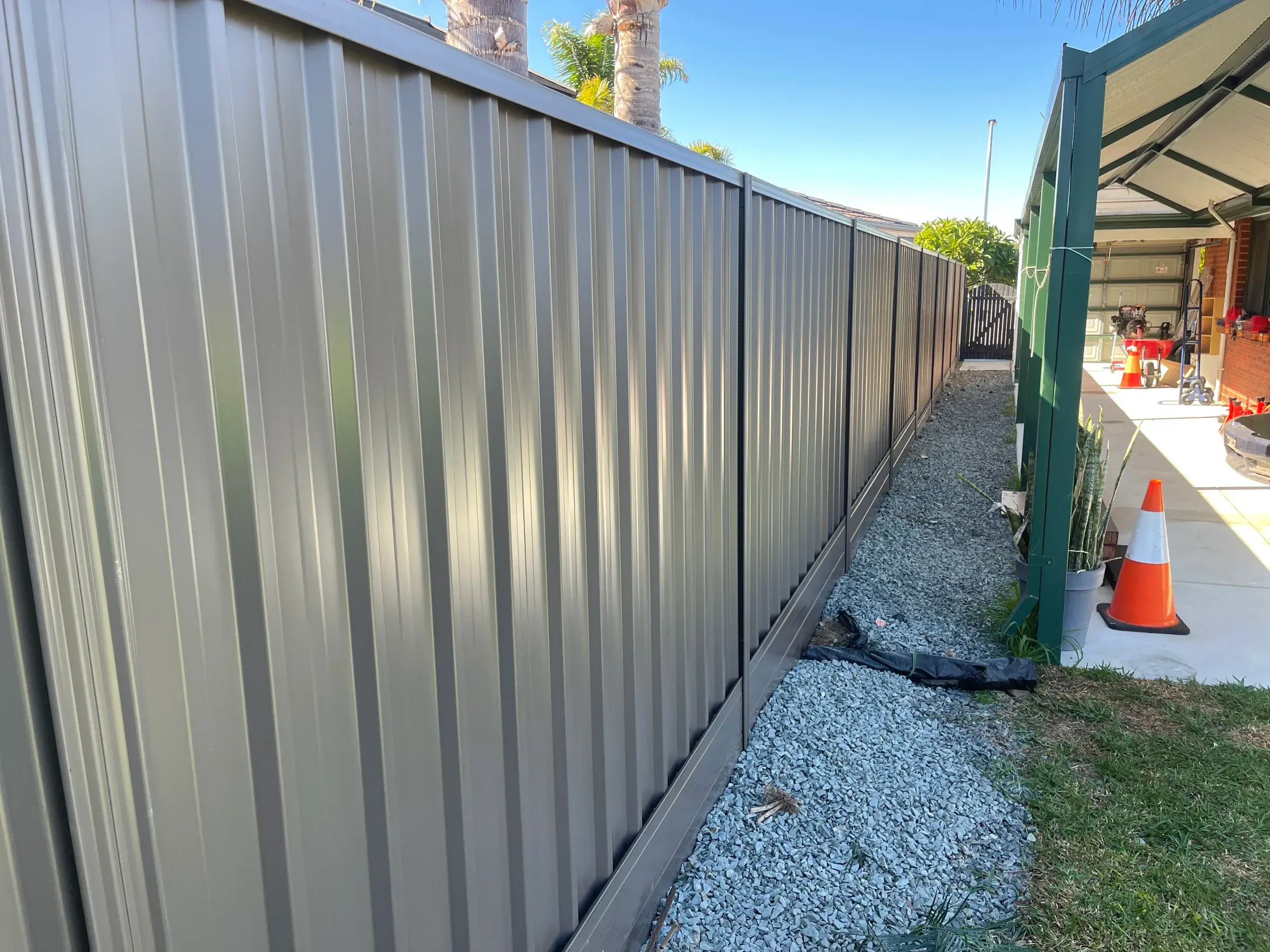
Grey Colorbond, side boundary
What affects the cost
Length is the obvious one, but it is rarely the one that moves a quote most. Height changes the material in every panel. Ground slope decides whether the run is stepped or raked and how much extra work each panel needs. Access decides whether materials are carried by hand or brought in.
Then there is what is already there. An old fence to remove and dispose of is real time and real tip fees. Footings going into loose sand need more depth and more concrete; footings hitting limestone need different equipment. Corner posts and end posts cost more than intermediate ones, so a run with several changes of direction prices differently from a straight one of the same length.
Gates are effectively separate items. Each one needs its own posts, hardware and hanging, and an automated gate adds a motor, a power supply and safety equipment.
How it works
You get in touch
Tell us what needs doing — a photo helps more than a paragraph. We come back to you within 2 business days.
We measure it up
We come to the property, walk the job with you and measure properly. The measure is free, with no obligation.
You get it in writing
An itemised written quote — materials, labour and removal priced separately, so you can see what you are paying for. It holds for 30 days.
We book it in and do it
We agree a date, turn up on it, and take the mess with us when we go. The site is left clean.
Common questions
Do you take the old fence away?
Yes. Removal and disposal is part of a replacement job and it is itemised on the quote. You do not need to arrange a skip or a tip run.
Does Colorbond fade?
The finish is designed for Australian conditions and holds its colour a great deal better than paint on timber, but no exterior colour is completely unchanged after decades of direct sun. Darker colours show change more than lighter ones. The trade-off against repainting a timber fence every few years is not close.
Can you fence a sloping block?
Yes. It is either stepped — level panels dropping in stages, leaving small gaps at the bottom on the fall — or raked to follow the ground. Which suits depends on the degree of fall and whether you need the base tight for a dog or a pool area.
How deep do the posts go?
Deeper than you might expect, on sand. Depth is set by the height of the fence, the exposure of the site and what the ground is actually made of, which is why we measure rather than quote a fixed figure over the phone.
Can I get a fence and a gate at the same time?
Yes, and it is the sensible way to do it — the gate posts are set as part of the same run rather than cut into a finished fence later.
We also do
Putting in a fence? The retaining wall underneath it, the reticulation that has to be moved for the post holes, and the paving that runs up to it can all be sorted at the same time — one crew, one schedule.
Landscaping
Lawn and artificial grass, reticulation and repairs, garden maintenance, clean-ups, mulching and planting — across Mandurah, Peel and north to Rockingham.
Paving & Patios
Paving, patios and decking, retaining walls, concrete paths and curbing, and soakwells — built for sandy ground and coastal weather, across Mandurah and Peel.
Tell us what needs doing.
A written, itemised quote after we have measured the job — not a number guessed over the phone.