
Pool fencing in Mandurah
A pool barrier is a legal obligation, not a design choice. Glass, tubular or aluminium, built to meet the standard and to keep meeting it at inspection.
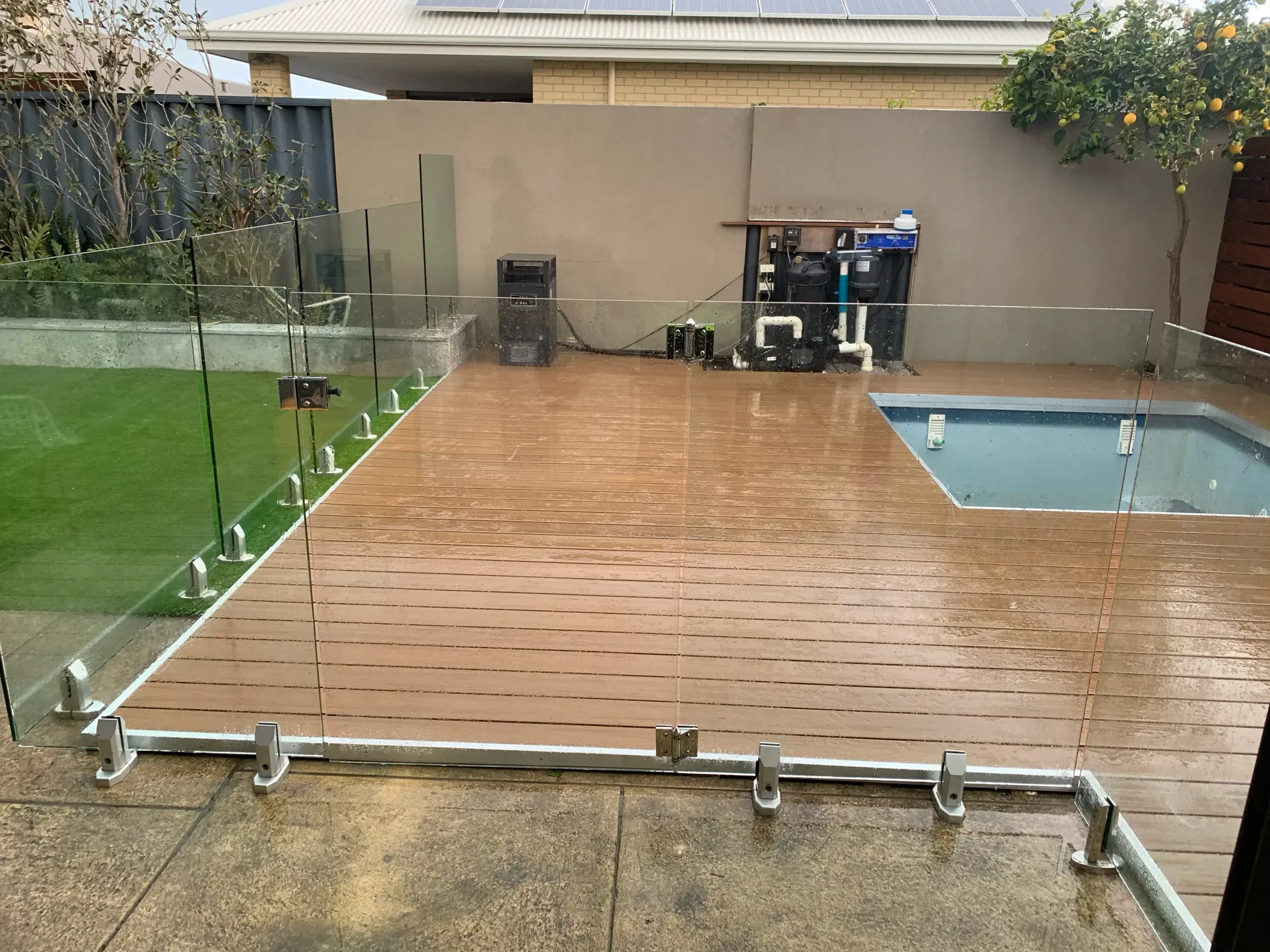
- Starts from
- $120 per metre + GST
- Compliance
- Built to the pool barrier standard
- Materials
- Glass, tubular and aluminium
About pool fencing
What makes a pool barrier compliant
Every other fence on your property is a matter of preference. A pool barrier is not — it is regulated, it is inspected, and a barrier that does not comply has to be fixed regardless of how much it cost or how good it looks. Local governments in WA are required to inspect private pool barriers periodically, so this is not a one-off hurdle at installation.
The rules cover more than height. Gaps between verticals and under the barrier, the height itself, the way the gate swings and latches, the height and position of the latch, and the non-climbable zone — the area on both sides of the barrier that has to be clear of anything a child could climb — are all specified. In practice the non-climbable zone is what catches people out most often, because it is affected by things that arrive after the fence does: a pot plant, a pool pump, a chair, a tree that has grown.
Glass, tubular or aluminium
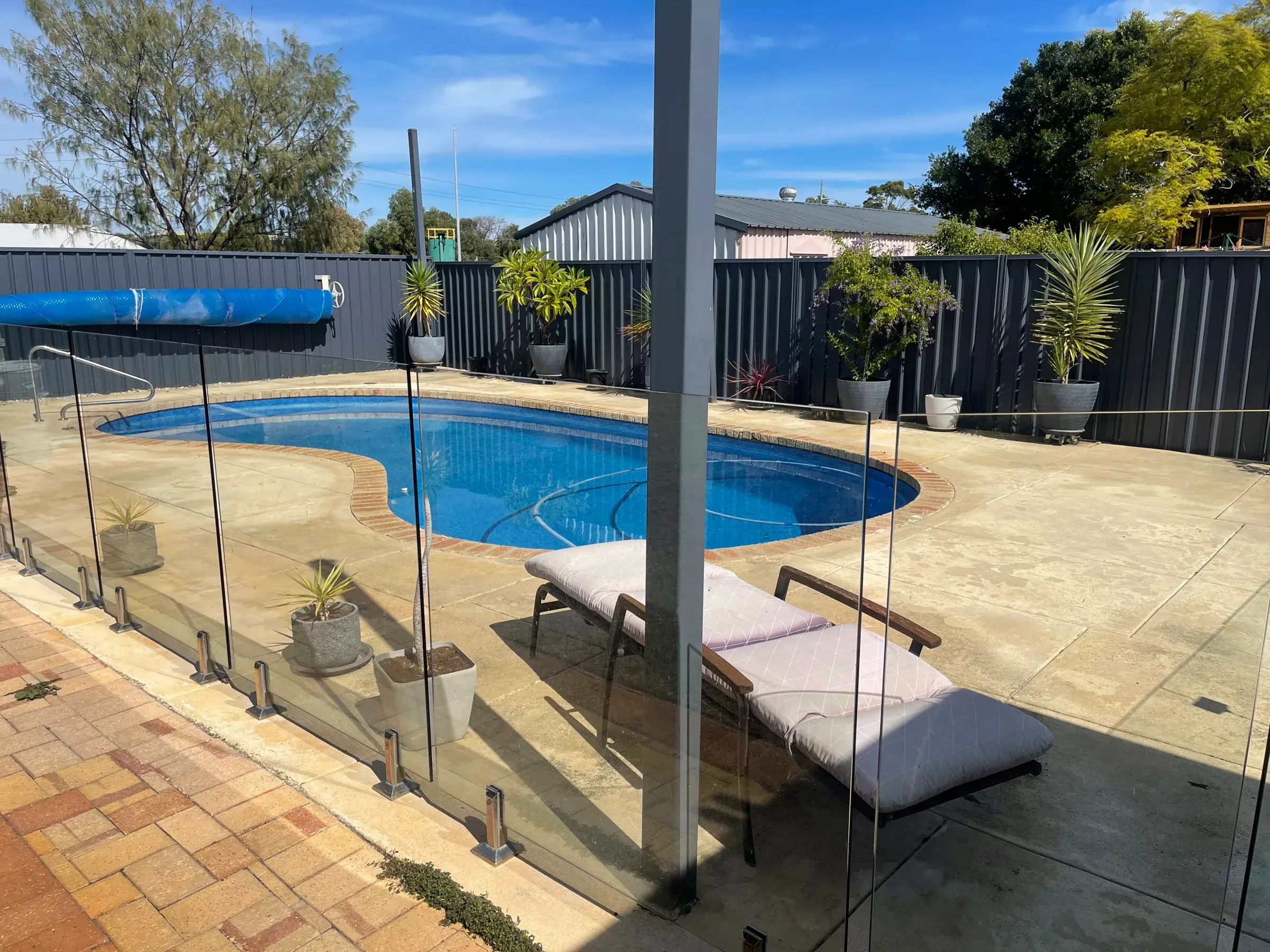
Frameless and semi-frameless glass is the premium option and the reason is obvious the moment you see it — the barrier effectively disappears and the pool area stays visually part of the yard. It also means you can see the water from the house, which is a genuine safety benefit as well as an aesthetic one. It costs more and it wants cleaning, particularly near the coast where salt marks show.
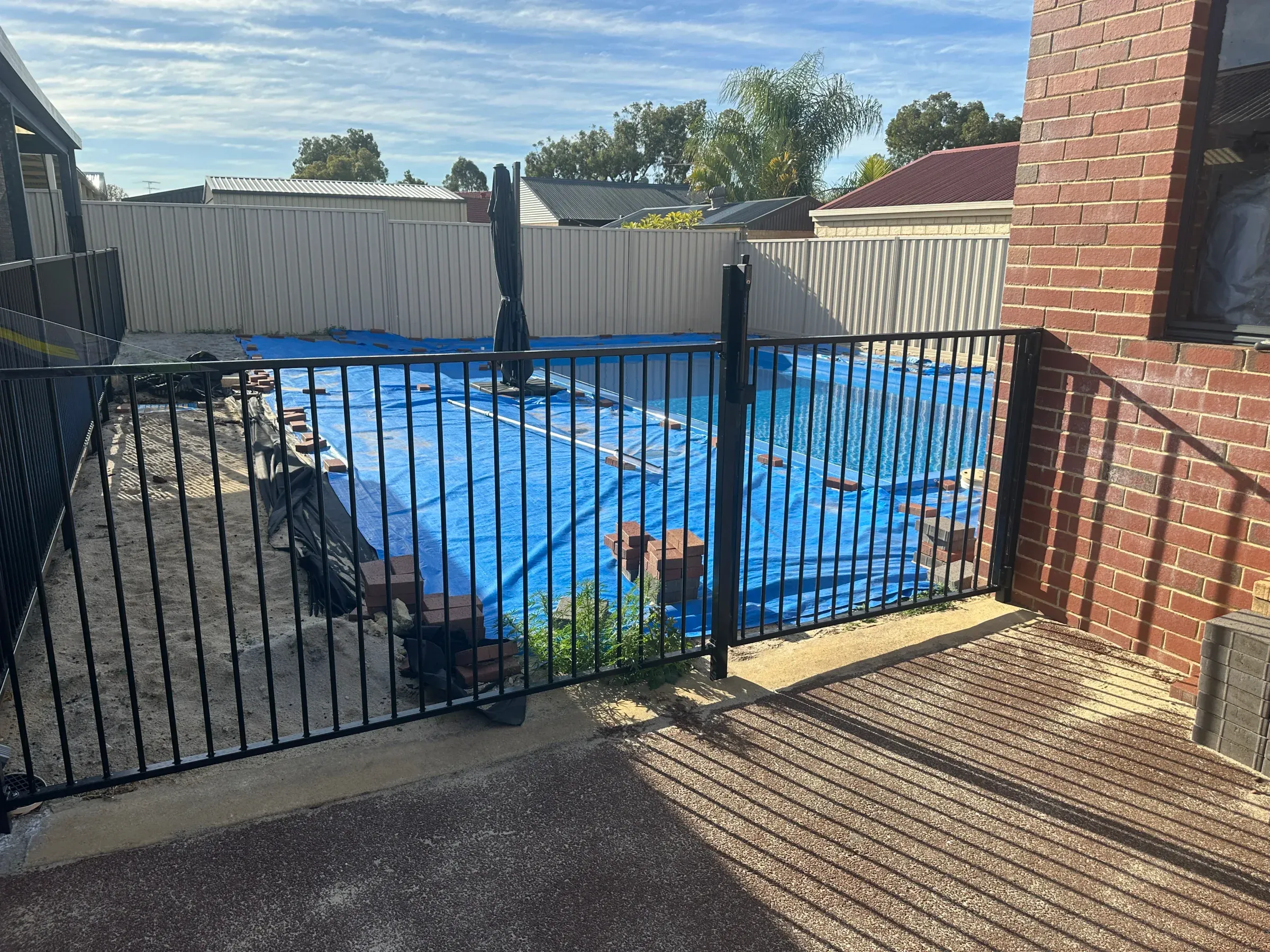
Tubular is the traditional pool fence: powder-coated aluminium verticals, long-lasting, far cheaper than glass, and essentially maintenance-free. Aluminium in general is the right family of material this close to the water, because it does not rust at all — an important difference from steel in a wet, salty, chlorinated environment.
Gates are where barriers fail
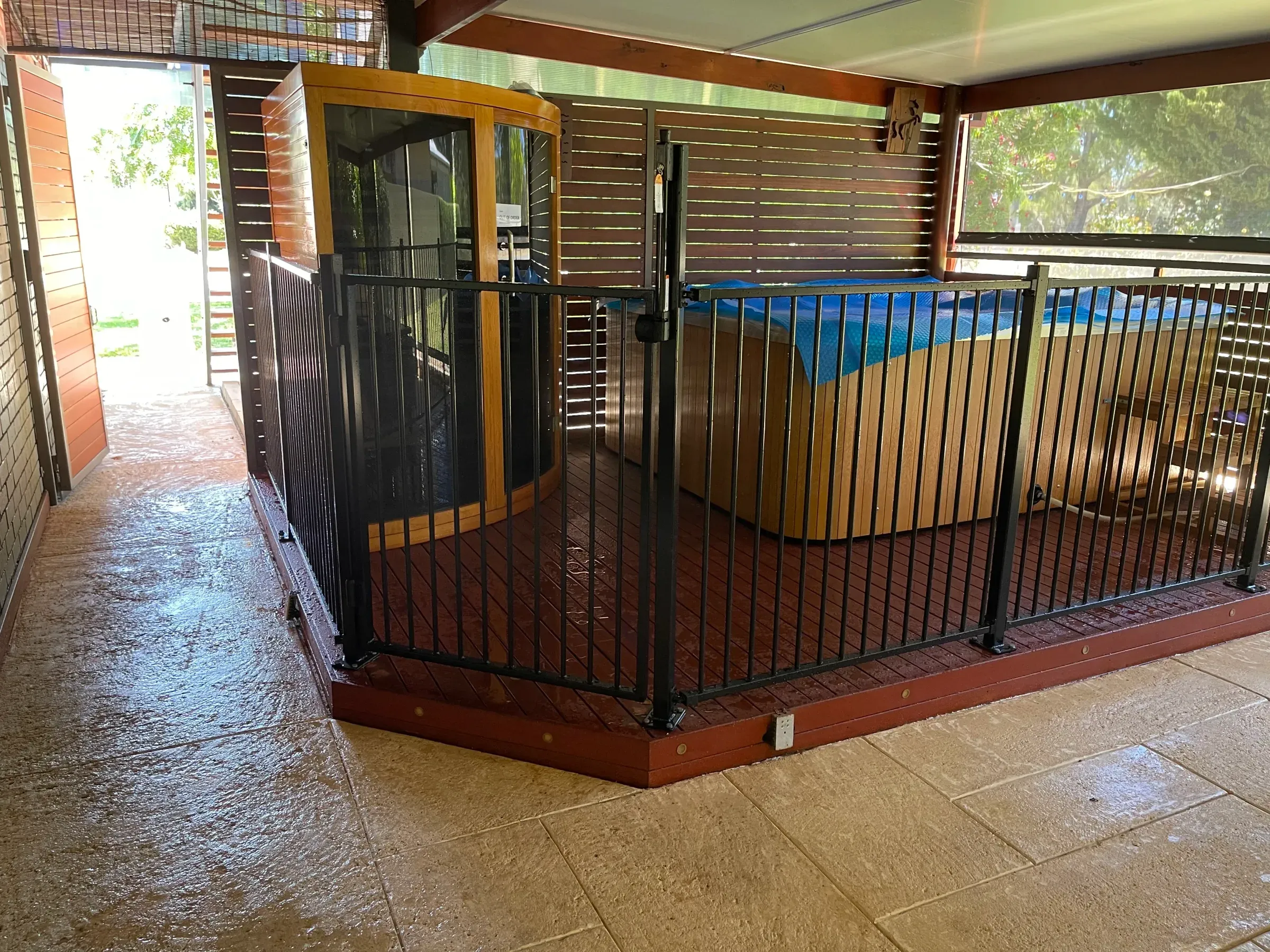
If a pool barrier is going to fail an inspection, the gate is the most likely reason. It has to self-close from any position and self-latch, the latch has to sit at the required height and be shielded so it cannot be reached through or over the barrier, and the hinges have to keep doing their job years later. Gate hardware in a chlorinated, salty environment works hard and does eventually wear.
A gate that has to be pushed the last few centimetres to latch is not compliant, even though it looks fine. It is worth checking yours occasionally by opening it a small amount and letting go.
What you get
Included as standard
- A barrier specified and built to meet the pool barrier standard
- Compliant self-closing, self-latching gate hardware
- Footings suited to the ground on your block
- Site left clean, packaging and offcuts taken with us
Not included
- The local government inspection or its fee
- Moving pumps, filters, pots or structures that sit inside the non-climbable zone
- Certification — we build to the standard, but the inspection is your council's
- Paving or coping repairs where an old barrier is removed
Any of these can be quoted alongside the job — they are listed so the quote does not surprise you, not because we cannot do them.
Pool fencing we have done
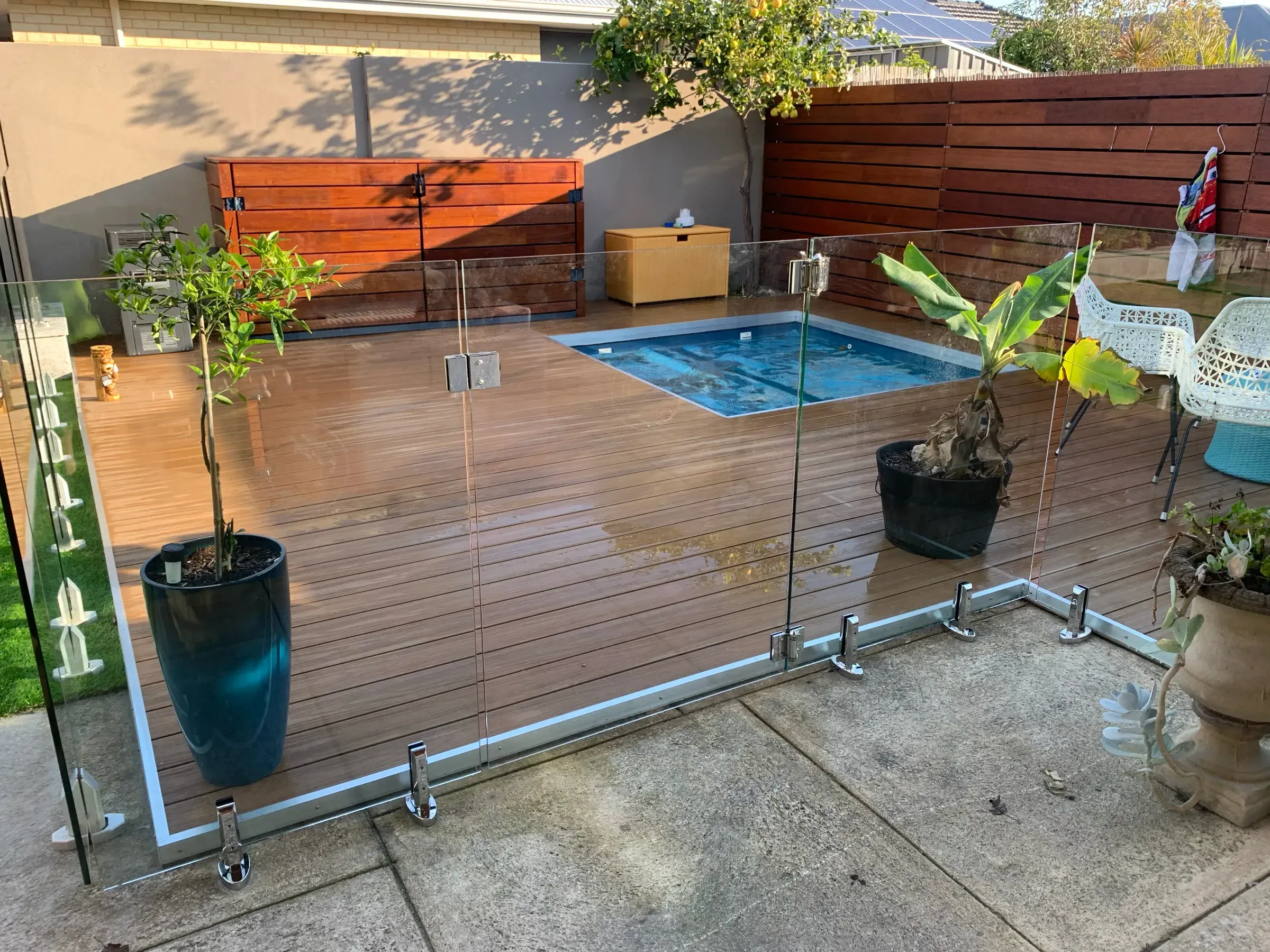
Glass barrier in a planted courtyard 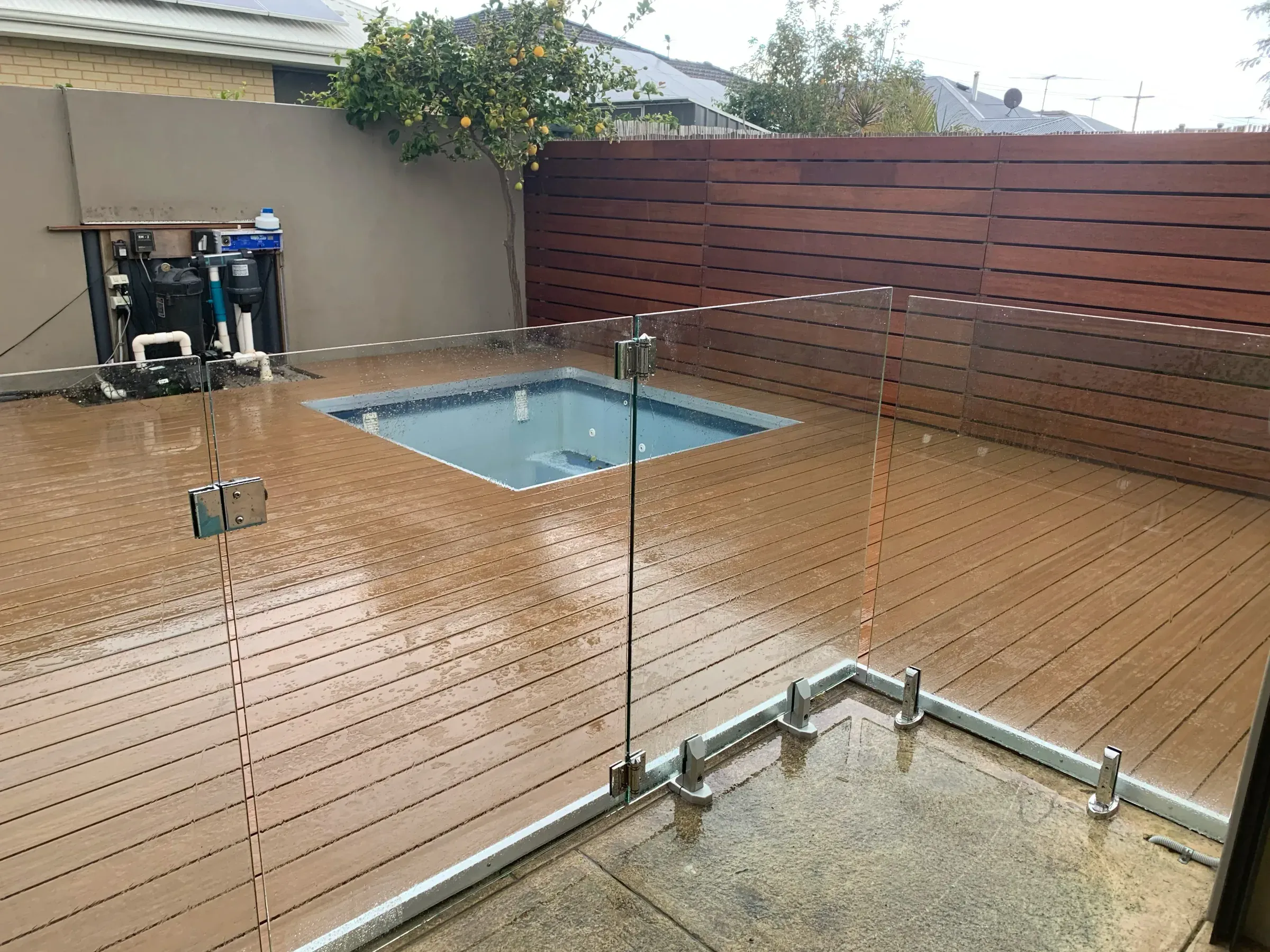
Glass barrier, spigot fixings 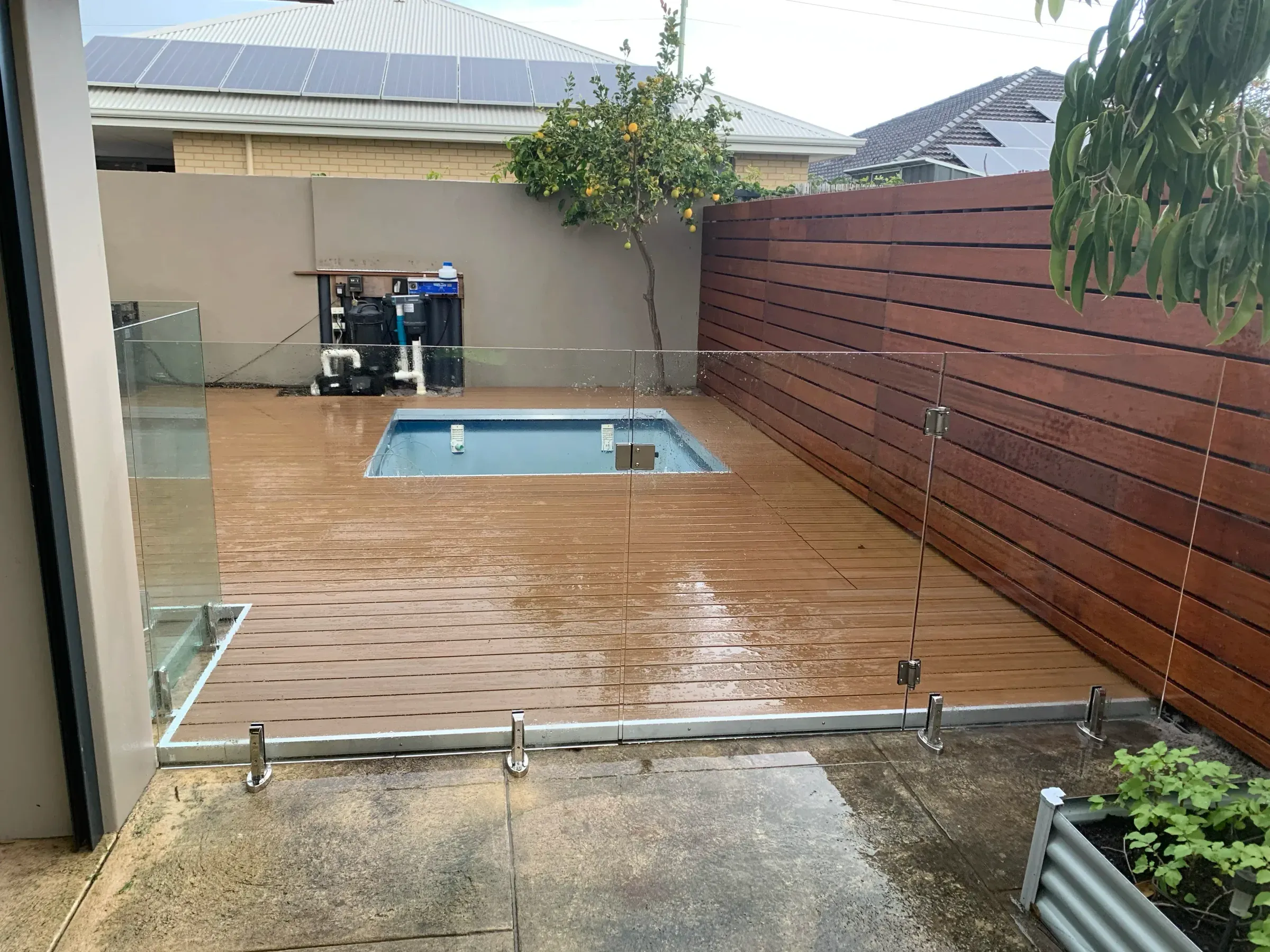
Glass barrier, plunge pool 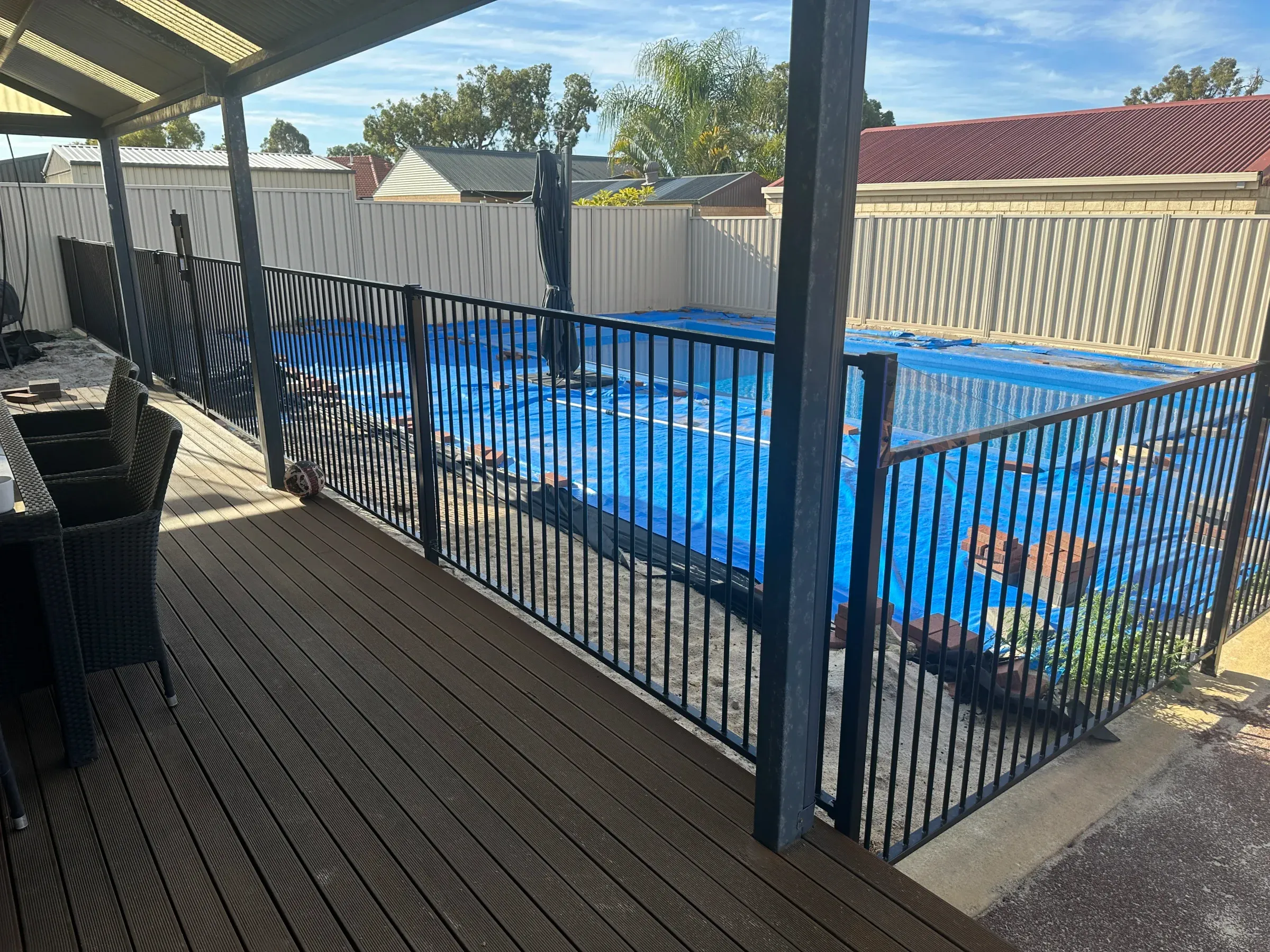
Tubular barrier from the deck 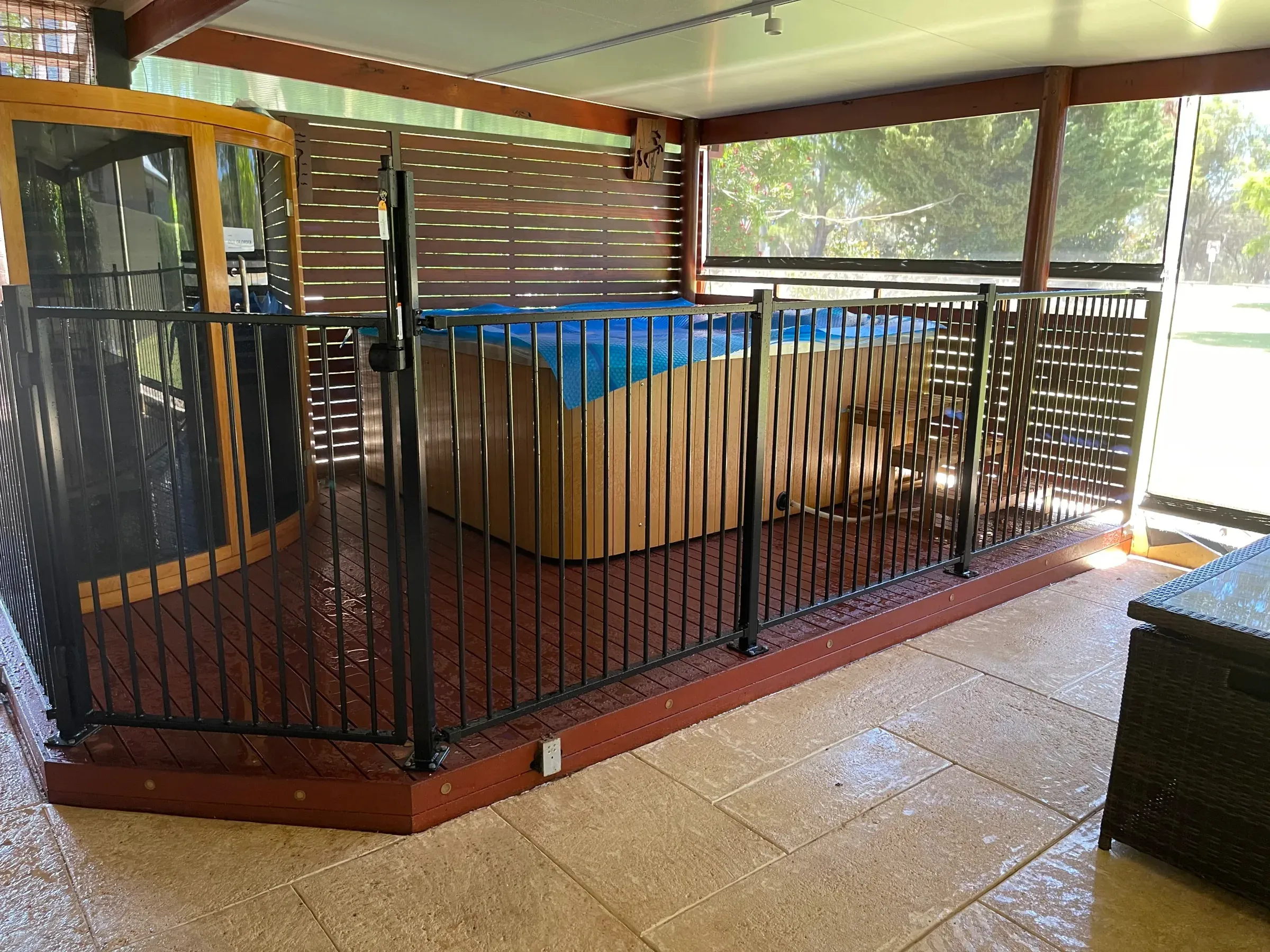
Tubular barrier beside a deck
What affects the cost
Material is the biggest single factor and the gap is wide — frameless glass and powder-coated tubular are different orders of cost for the same run. Semi-frameless sits between the two.
After that it is the shape of the run. A simple rectangle prices very differently from a barrier that follows a curved pool surround with several changes of direction, because every corner is another post and another set-out. Whether the barrier is fixing into paving, into a limestone coping or into ground changes the fixing method too.
Gates are priced individually, and a barrier needing two gates is meaningfully more than one needing a single gate. If an old non-compliant barrier has to come out first, that is a line as well.
How it works
You get in touch
Tell us what needs doing — a photo helps more than a paragraph. We come back to you within 2 business days.
We measure it up
We come to the property, walk the job with you and measure properly. The measure is free, with no obligation.
You get it in writing
An itemised written quote — materials, labour and removal priced separately, so you can see what you are paying for. It holds for 30 days.
We book it in and do it
We agree a date, turn up on it, and take the mess with us when we go. The site is left clean.
Common questions
Do you certify the pool fence?
We build to the standard, but certification is not ours to give — private pool barriers in WA are inspected by your local government. What we can do is make sure what we install is built to pass, and tell you about anything on your side of the barrier, like a pot or a pump, that would fail the non-climbable zone.
Is glass pool fencing worth it?
It costs considerably more than tubular and it needs cleaning, especially near the coast. What you get is an uninterrupted view of the pool area from the house and a yard that does not feel divided in two. Whether that is worth the difference is a genuine question of budget and outlook, not a trick one.
My pool fence failed an inspection. Can you fix it?
Usually, and often without replacing the whole barrier. Gate hardware, latch height, a gap that has opened up or something sitting in the non-climbable zone are the common failures and they are repairs. Send us the inspection notice and a photo and we can tell you roughly where you stand.
How high does a pool fence have to be?
The standard sets a minimum height, along with rules on gaps, the non-climbable zone and gate latching. Rather than quote a number that might change, we work to the current standard and check the specifics of your site at the measure — the height is rarely the part that catches people out.
We also do
Putting in a fence? The retaining wall underneath it, the reticulation that has to be moved for the post holes, and the paving that runs up to it can all be sorted at the same time — one crew, one schedule.
Landscaping
Lawn and artificial grass, reticulation and repairs, garden maintenance, clean-ups, mulching and planting — across Mandurah, Peel and north to Rockingham.
Paving & Patios
Paving, patios and decking, retaining walls, concrete paths and curbing, and soakwells — built for sandy ground and coastal weather, across Mandurah and Peel.
Tell us what needs doing.
A written, itemised quote after we have measured the job — not a number guessed over the phone.